Cleanroom packaging for machined stainless parts: bags, caps, labels and what the cleanroom class really covers
November 11, 2026
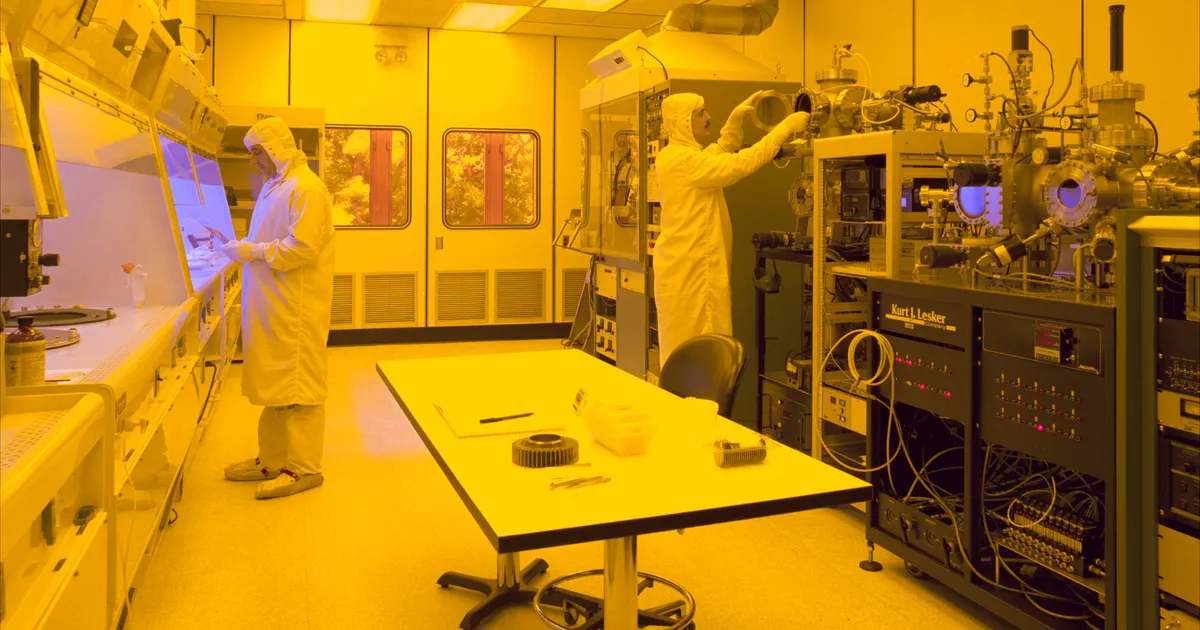
An ISO cleanroom class describes the air in a room, not the parts in it and not the bags around them. That is the first thing to get straight when a drawing note says “cleanroom packed”. What keeps a cleaned stainless part clean on its way to you is a short chain of choices: how many bag layers, which film, where the bag is sealed, whether open ports are capped, how parts are kept from touching and where the label goes. This guide lists those choices and what to write on the order. The cleaning that comes before it is in the cleaning steps guide.
What a cleanroom class does and does not say
ISO 14644-1 classifies air cleanliness by particle concentration. A Wikipedia summary of the 2015 edition gives these limits for particles of 0.5 micrometre and larger, counted cumulatively per cubic metre of air:
| ISO class | Maximum particles per m³ (0.5 µm and larger) | Older Federal Standard 209E name |
|---|---|---|
| ISO 5 | 3,520 | Class 100 |
| ISO 6 | 35,200 | Class 1,000 |
| ISO 7 | 352,000 | Class 10,000 |
| ISO 8 | 3,520,000 | Class 100,000 |
The numbers apply to room air. They say nothing about residue on a part, particles inside a bag or the oils a bag film can give off. So two requirements belong on the order, and they are separate:
- Cleanliness of the part: a named method and a limit, for example a particle count or a non-volatile residue limit, agreed with the shop.
- Packaging of the part: layers, film, closure, labelling and the area where it is done.
A medical device maker has to define its own product cleanliness requirements, including cleaning before sterilisation and cleanliness of non-sterile devices, according to an FDA hosted audit approach for the Medical Device Single Audit Program. If you supply that maker, the requirement comes from them. Ask for it in writing before you quote.
Bag layers and film
Public sources show three common patterns. None is a universal rule, and the first two come from aerospace and oxygen service, where requirements are stricter than for most parts.
| Pattern | Source | What it shows |
|---|---|---|
| Nylon inner bag, polyethylene outer bag | NASA White Sands Test Facility contamination page | Precision cleaned items go in clean nylon or Teflon bags with an outer polyethylene bag to protect cleanliness until use |
| Double bagged in clean antistatic nylon film | NASA Goddard contamination control practice | Hardware moved between facilities is double bagged. Inside the clean area the outer bag is removed first and the environment is allowed to stabilise before the inner bag comes off |
| Double bagged in heat sealed polyethylene | Clippard oxygen cleaning specification | Finished valves are double bagged and labelled “Cleaned for Oxygen Service”, and stay in the sealed bag until assembly |
The Goddard sequence is the useful part. The outer bag is the one that meets dirty hands, cartons and loading docks. It comes off at the boundary of the clean area. The inner bag then stays closed until the parts are inside. A single bag cannot do both jobs.
The film is a contaminant source too
Particle control and chemical cleanliness can pull in opposite directions. Two NASA Johnson Space Center curators reported that heat sealing Teflon, nylon and polyethylene together in a nitrogen glovebox released caprolactam from the nylon at 1,300 ng/cm² and smaller amounts of other organics. Their gas extraction table lists caprolactam among the species given off by nylon when melted. Teflon gave off none in that table, and polyethylene gave off simple hydrocarbons.
That does not make nylon wrong. It means a bag that keeps particles off can add a film of molecules, and a stainless part for a surface sensitive application, such as a vacuum or optical assembly, may not tolerate it. Most machined stainless parts are not that sensitive. The point is to ask your customer which film they accept instead of leaving it to the shop’s default.
For bag quality, the NASA Goddard practice describes acceptance tests on its transport bags that include particle counts, tape lift samples and rinse residue tests. A shop does not need that for ordinary work, but if your cleanliness limit is tight, ask the bag supplier for particle and extractables data on the lot.
Caps, plugs and part separation
Open threads and bores collect debris and are the first places a cleanliness test finds it. Swagelok’s oxygen cleaning and packaging specification, which its suppliers follow, covers end connections with clean caps and plugs where needed, packs each product individually in a sealed plastic bag, boxes the bags with protective material and labels the box with part number and quantity.
The same principle applies to stainless parts that touch each other. NASA Goddard found scraping between hardware to be a source of debris in vibration tests and fixed it by separating the hardware or adding an isolating layer of nylon or Teflon. Machined stainless parts bagged loose together will scratch, shed fines and, on a fine finish, mark. Specify one of these:
- One part per bag, for critical or finished surfaces
- Trays or separators inside the bag, for small parts
- Caps or plugs on bores and threads, with the cap material named if it matters
The Ra guide explains why a finish that took effort to reach should not ship loose.
Need a quote for this part? Get a quote for your stainless parts
Labels and closure
We found no standard that says where a label must sit. The oxygen service specifications show the common practice: the label is on the bag, with wording that tells the next person what the bag holds. Swagelok’s label says not to open the bag until ready for use, and Clippard’s names the cleaning service. Based on that, a sensible set of rules for an order is:
- Put the label on the outside of the outer bag so nothing adhesive touches the part or the inner bag.
- Include part number, revision, quantity, lot and heat number so the bag ties to the mill certificate.
- Add the cleaning and passivation reference if your customer requires it.
- State the closure: heat sealed, taped or zip. A heat seal that has to be cut open on arrival keeps the bag intact until it is needed, but see the film point above.
- Require gloves for handling cleaned parts. Clippard’s oxygen specification does the same in its controlled area.
Drying, moisture and corrosion inside the bag
A part sealed wet stays wet. Clippard’s specification dries cleaned parts with heat, forced air or compressed nitrogen after a purified water rinse. Chloride from tap water or fingerprints is the usual corrosion risk for stainless, so rinse quality and drying come before the bag. The passivation test guide covers how to confirm the surface is in good state before packing.
We found no standard source on whether vapour corrosion inhibitor paper or film, or a desiccant, suits a given stainless part. Before you add either, ask your customer, because an additive in the bag is one more thing that can leave residue on the part.
What to write on the order
- Cleanliness of the part: method and limit, for example a particle or residue test, and who verifies it.
- Cleanroom class, if any: the ISO 14644-1 class of the area where parts are unbagged or packed, stated as the area class and not as a property of the part.
- Layers and film: single or double bag, the film for each layer and whether heat sealing is allowed.
- Separation: one part per bag, trays or separators, and caps on bores and threads.
- Labels: position on the outer bag, contents and any required wording.
- Handling: gloves, no bare hand contact after cleaning and no loose stacking.
- Records: a packing record with date and operator, and the cleaning and passivation certificates.
- Scope: say if sterilisation or ISO classed packing is not wanted. Both are normally separate steps by the device maker or a specialist and need their own agreement and price.
To get quotes that carry your packaging requirement, send the drawing through the RFQ form and put the packaging lines in the notes. We send one itemised quote within 24 business hours and place the work with partner shops that cut stainless. We own no machines, and we do not run cleanrooms or certify packaging.
Sources
- Wikipedia, Cleanroom, summary of the ISO 14644-1:2015 class table
- NASA White Sands Test Facility, Component Services and ORETL
- NASA Goddard, Contamination Control Program, Preferred Reliability Practice PD-ED-1233
- NASA Johnson Space Center, Allton and Burkett, Technical tension between particulate and molecular organic cleanliness
- FDA, Medical Device Single Audit Program, audit approach
- Swagelok, Special Cleaning and Packaging SC-11 (MS-06-63, May 2024), supplier specification, directional
- Clippard, Cleaning for Oxygen Service ES-3.41, supplier specification, directional
The oxygen service and aerospace documents show practice in demanding applications. They are not requirements for every stainless part. Use the cleanliness and packaging requirements your customer states.
Frequently asked questions
What cleanroom class do I need to pack machined stainless parts?
There is no single answer. ISO 14644-1 classes the air in a room by particle count, so the class you write on an order describes where the bagging happens, not how clean the part or the bag is. Name the room class if your customer needs one, and name the cleanliness limit and test for the part separately.
Is double bagging required for cleaned stainless parts?
No standard we found makes it universal, but it is common practice. NASA describes double bagging in clean antistatic nylon film for moving flight hardware, and an oxygen valve maker double bags in heat sealed polyethylene. The point is that the outer bag can be removed at a clean area boundary while the inner bag stays sealed.
Should cleanroom bags be nylon or polyethylene?
Both are used, and each has a trade off. A NASA centre packs precision cleaned items in clean nylon or Teflon bags with an outer polyethylene bag. NASA Johnson data show nylon gives off caprolactam when melted, so heat sealing nylon can add molecular residue. Ask your customer which film they accept.
Does a machine shop normally pack parts in a cleanroom?
Not normally. A shop usually cleans, rinses, dries and bags parts in a controlled handling area and ships them to the device maker, who does any cleanroom packaging or sterilisation. If you need ISO classed packing, say so in the RFQ so the shop can quote it or decline.
Need a quote for this part?
Send the drawing. We read it, send one itemised quote within 24 business hours and place the work with a partner shop that cuts stainless.
Get a quote for your stainless partsFigures in this guide are published specification limits or published typical values for the alloy, not measurements of any part. Machinability is rated against free-machining carbon steel B1112 at 100 and PREN is chromium plus 3.3 times molybdenum plus 16 times nitrogen. The conventions are set out in thereference section and the editorial standards.