How to line up two stainless machining quotes before you pick one
November 18, 2026
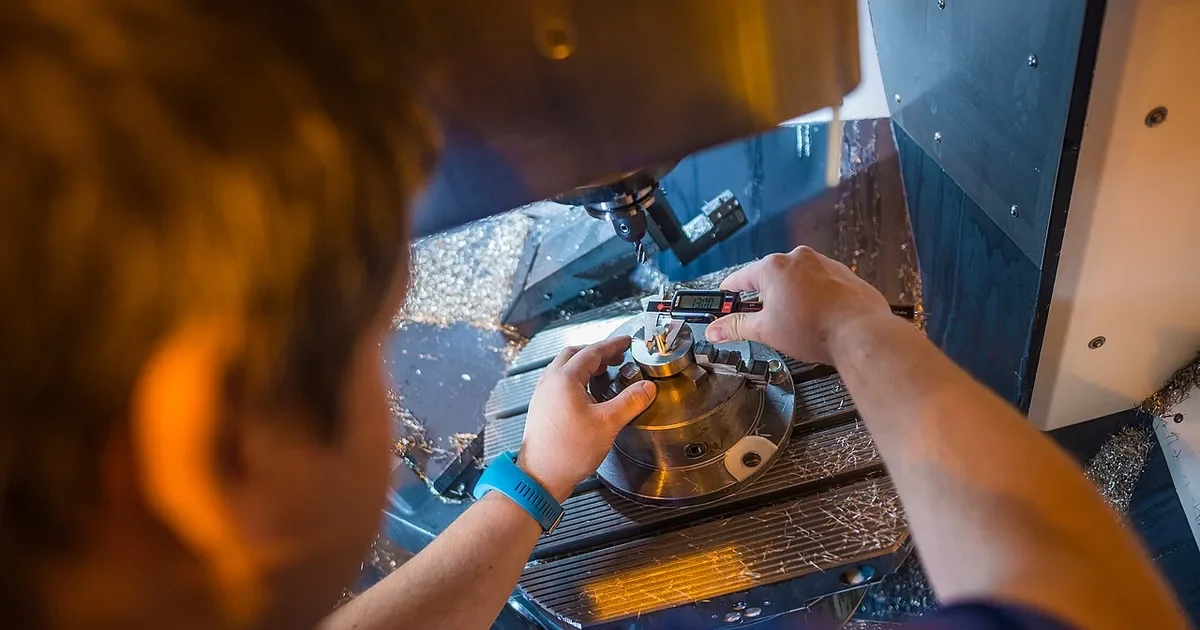
A stainless machining quote is only comparable with another one when both describe the same part, the same documents and the same delivery. The method is to copy each quote into one table, fill every blank with an assumption and ask the shop to confirm or correct it. This post is part of our guide to a stainless steel machining quote, and it covers the comparison step in checklist form: before the RFQ, in the RFQ, when the quotes arrive and before shipment.
Everything below works with any shops you have.
The table to build first
Open a spreadsheet and give each quote a column. The rows below are the lines that move a stainless quote and the ones most often missing. The last column says what a complete answer looks like.
| Line | What to find in the quote | Why it moves the price | Complete looks like |
|---|---|---|---|
| Grade and specification | Grade, bar standard, condition | A swap changes material and cutting time | 316L per ASTM A276, restated |
| Stock form | Round, hex, plate or near-net | Chips carry the same material cost | Form and blank size named |
| Material price basis | Fixed with a date, or indexed | Mills publish the surcharge monthly | Validity date or named table |
| Tolerance scope | General note and marked features | Scope sets inspection and scrap risk | ISO 2768 class plus listed features |
| Finishing and who does it | Deburr, blast, passivation, polish | A second supplier adds a queue | Standard and test named |
| Documents | Certificate type, reports | Each document is office time | Type and number of reports listed |
| Inspection | Features measured, report format | Six dimensions cost less than forty | Features and format listed |
| Packaging | Bag, cap, export pack | Cleaning and packing add steps | Method stated |
| Lot size | Quantity and break points | Setup is shared across the run | Break points shown |
| Delivery term | Incoterm, destination, importer | Duty lands on one side or the other | Term, place and importer written |
| Lead time | Steps covered, outside work | Subcontract queues hide in totals | Steps listed |
| Validity | Date and conditions | Short windows mean material risk | Date written |
Sources: line structure from our own review of stainless RFQ practice. The surcharge basis follows the producer description in Outokumpu’s surcharge page; Incoterms follow the ICC Academy summary.
Stage 1: before the RFQ
These items make the later comparison possible. Each has a reason, and a sign that it was done well.
- Decide the delivery term and the importer of record. The ICC Academy summary of Incoterms 2020 says DAP and DDP both pass risk at the named destination, but under DAP the buyer handles and pays for import clearance and under DDP the seller does. Good looks like one term written once and sent to every shop.
- Write the grade and the bar specification. If the grade is open, write the environment instead. Good looks like a line a shop can restate back to you.
- Choose the finish by standard and test. ASTM A967, as its catalogue page shows, covers nitric, citric and electrochemical treatments and seven test practices, and it makes no recommendation on which suits an application. The standard gives you the menu; the choice is yours to write. Good looks like “ASTM A967 citric, copper sulphate test, certificate”.
- Pick the documents by type. The one document nobody at the shop writes is the mill certificate. EN 10204 distinguishes types 2.1, 2.2, 3.1 and 3.2, and the one you write should be a type, not the word “certificate”. Good looks like “type 3.1 with heat number”.
Stage 2: the RFQ
Make the RFQ the same for every shop. Our own RFQ form asks for the fields that most affect comparability. Each is listed with the reason it matters.
- Part description. Name the part, size, features, grade and finish in one sentence, so every shop starts from the same description. The form’s own example reads: 316L valve body, 90 x 60 x 45 mm, two G1/2 ports, internal Ra 0.8 micrometre, passivated to ASTM A967 citric, mill certificate needed.
- Stainless grade. Pick from the list, or state that it is open. A shop prices the grade you name, so an open grade invites different assumptions.
- Quantity. Bands of 1-10, 11-100, 101-1,000 and 1,000+. Say whether it repeats. The band decides which break point each shop quotes, and a repeat changes how setup is shared.
- Tightest tolerance. From ±0.1 mm down to tighter than ±0.01 mm, or not sure. The tightest tolerance sets inspection and scrap risk, so shops quote against it.
- Surface finish and passivation. As machined, deburred, blast, Ra 0.8 micrometre or better, passivated to ASTM A967, electropolished to ASTM B912. Finishing often happens at a second supplier, so an unnamed standard is priced on a guess.
- Needed by. As soon as possible, 2-4 weeks, 1-2 months or flexible. A firm date can change the route a shop chooses, and a flexible one can lower the price.
- Certificates you need back. Type and number. Each document is office time, and a type names exactly what is delivered.
- Drawing and NDA. Attach the drawing and tick the NDA box when the file is sensitive. Without the drawing a shop can only quote from a description, and an NDA needs to be agreed before files are shared.
Send the same text to every shop. A shop that receives a different brief quotes a different job.
Need a quote for this part? Get a quote for your stainless parts
Stage 3: reviewing the quotes
When the quotes arrive, work in this order.
- Restate. Copy each quote into the table. Where a cell is blank, write “assumed” and the most likely assumption.
- Send the blanks back. Ask each shop one message with all of its blank cells, not several. A shop that answers precisely is easier to work with later.
- Adjust for terms. Add freight and import costs to ex works quotes. For parts imported into the United States that sit on the Section 232 lists, duty is charged on the full customs value under Proclamation 11021 of April 2026, so a quote that excludes duty is lower by that amount before any other difference. A customs broker confirms the rate for each part.
- Compare the material basis. A fixed price with a short validity date and a price that follows a surcharge table carry the risk in different places. Do not rank them on price alone.
- Then compare totals and lead time.
If one scope is richer, re-quote the leaner one on it, or ask the richer one what it would remove. Keep the other shop’s name and price out of the message and send only the written scope.
Stage 4: before shipment
The comparison does not end at the purchase order.
- Ask for a first article before the full run on a new shop or a new part, so a misreading shows up on a few parts instead of the whole run.
- Check that the certificate matches the parts. The heat number on the certificate has to appear on the traveller or the part marking. If it does not, the certificate says nothing about the parts in the box, and the traceability you paid for is missing.
- Check the passivation certificate against the standard you wrote. It should name the treatment and the test, because the test is what shows the finish did its job.
- Confirm packaging before parts leave. Cleaned, bagged or capped parts arrive in the form the drawing needs, and re-cleaning or re-packing after delivery is cost you did not quote.
Red flags
- The quote arrives at once with no questions on a drawing that has gaps.
- It is far below the others and omits a certificate, test or report.
- Passivation is priced without a standard.
- The lead time is much shorter and nothing is said about outside work.
- The quote does not restate your specification.
What to do with the result
Pick on the normalised table, not the headline total. If two quotes pass every row and still differ, the gap belongs to the shop, and the shop vetting questions are the next step. The full RFQ list is in the RFQ checklist, and the pillar guide to a stainless steel machining quote covers the lines in more depth.
If the grade line differs between quotes because a shop proposed a swap, the stainless grade substitution checklist lists what to ask before you accept it.
If you want quotes on the same written scope from several shops, send the drawing through the RFQ form. We send one itemised quote within 24 business hours and place the work with partner shops that cut stainless.
Sources
- ICC Academy, DAP and DDP Incoterms 2020 explained, import clearance and risk transfer
- Outokumpu, alloy surcharges, the surcharge is published month by month
- ASTM A967/A967M, Chemical Passivation Treatments for Stainless Steel Parts (ASTM store, 2017 edition page; a later edition is active), treatments and test practices
- Project Materials, EN 10204 certificate types, directional summary; the standard text is paywalled and was not read
- Proclamation 11021, 2 April 2026 (govinfo), duty on full customs value
Duties and regulations change, so confirm with a customs broker before you commit to a price.
Frequently asked questions
How do I compare stainless machining quotes that look different?
Turn each quote into the same table: grade and specification, stock form, material price basis, tolerance scope, finishing and who does it, documents, inspection, packaging, lot size, delivery terms, lead time and validity. Mark every blank as an assumption and ask the shop to confirm it. Compare totals only after the rows match.
Should I accept the lowest stainless machining quote?
Not before the scope matches. A low quote often leaves out the passivation test, the certificate type or the inspection report, and those lines return as extras or as a dispute at delivery. Normalise first, then compare price, lead time and the quality of the shop's questions.
What if a shop quotes ex works and another quotes delivered?
Add freight, insurance and import costs to the ex works quote before you compare. Under DAP the buyer handles import clearance and its costs, and under DDP the seller does, so duty may sit inside one price and outside the other. Ask each shop to state the term and who is importer of record.
Can I ask a shop to re-quote on another shop's scope?
Yes, if you remove the other shop's name and price and send only the written scope. Most shops will re-quote or tell you which lines they would drop. Do not forward another shop's quote, because the price is that shop's information and the request becomes a negotiation instead of a clarification.
Need a quote for this part?
Send the drawing. We read it, send one itemised quote within 24 business hours and place the work with a partner shop that cuts stainless.
Get a quote for your stainless partsFigures in this guide are published specification limits or published typical values for the alloy, not measurements of any part. Machinability is rated against free-machining carbon steel B1112 at 100 and PREN is chromium plus 3.3 times molybdenum plus 16 times nitrogen. The conventions are set out in thereference section and the editorial standards.