Dual sourcing machined stainless parts: how to qualify a second shop
November 21, 2026
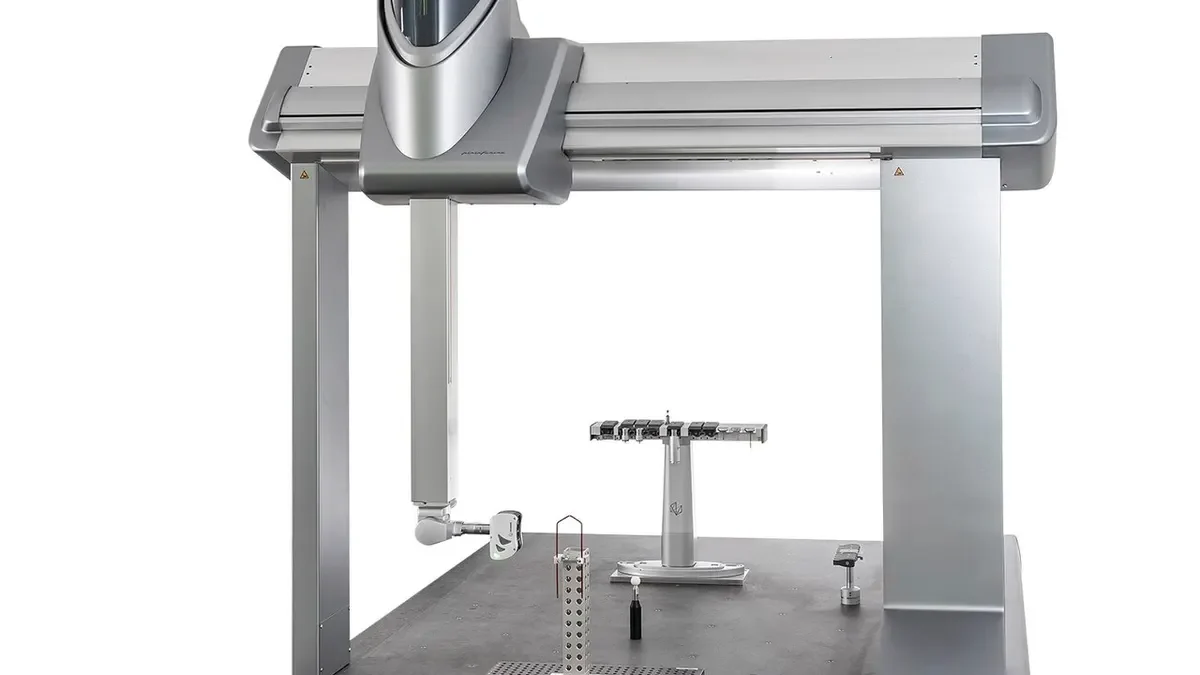
A second shop only protects your supply if its parts are interchangeable with the first shop’s and it has made a part for you recently. Most failed backups fail on one of those two points: the second shop reads the drawing differently, or it has not run the job in a year and cannot restart in a week. This guide covers the qualification steps for a second shop that cuts stainless to your drawing, what to match between the two, and how to keep the backup live without paying for a second shop to sit idle.
We do not qualify shops for you and we hold no certificates. The steps below are common practice from quality guides and supplier-risk guides, labelled by source.
Decide if the part needs a second shop
A second source costs money before it saves any. A consulting framework for dual sourcing says a total cost of ownership comparison should include qualification costs, and its medical device example shows tooling and validation being duplicated for a housing part. A guide on backup suppliers suggests a second source for items that are structurally single-source, hard to substitute quickly, slow to restore and with a history of disruption. A part that several shops could cut from a drawing with a week’s notice may not need one.
Questions that decide it:
- How long would a restart take? Count the quote, the fixtures, the first article, the bar and the finishing. Our lead time guide lists where those weeks go.
- Is the shop part of your approved source? If your own customer approved the shop or the process, a change may need their approval. Some regulated buyers expect to approve supplier changes, as our audit guide explains.
- Is the process special? Passivation or a tight tolerance may be the hard part, and the second shop needs the same capability.
Match the specification before you match the price
Interchangeable parts start with an identical order. The consulting framework names the remedy for spec drift: tight specs, approved material lists, process controls and change control across suppliers.
| Item | What to make identical in both shops |
|---|---|
| Drawing | Same revision, same datums and same notes, issued to both on the same day |
| Grade | Same designation system and number, for example UNS S31603, with an agreed rule on any swap. See the grade substitution checklist |
| Bar specification and condition | Same standard and condition, such as ASTM A276 Condition A. See A276 against A479 |
| Certificates | Same type for each lot, with the heat number on the part record. See the mill certificate guide |
| Finish and passivation | Same process, same test method and same record |
| Inspection plan | Same features measured, same method, same sample size |
| Packing and marking | Same label, same cleanliness requirement and same lot rule |
Write the table into a one-page part requirement sheet that goes with every order to either shop. The sheet is the thing a new shop reads, and it should not live in an email thread.
Run the first article at the second shop
First article inspection (FAI) is the standard way to prove that a new source can make a part. A general reference describes FAI as process validation for a new or modified production process, notes it is typically a purchase order requirement, and says the characteristics are measured with tools such as coordinate measuring machines, calipers and go and no-go gauges. In aerospace the report format follows AS9102, which uses three forms, but you can ask any shop for the same discipline: every drawing characteristic, numbered, measured and recorded.
For a second shop, treat a new source on an existing part number as a full first article, not a spot check. A consulting framework lists first article inspection, process capability studies and regulatory approvals as typical validation for a second source. Ask for:
- A report on the full drawing, with a balloon or number on every characteristic and the measured value beside it.
- The certificate for the bar, with the heat number written on the report.
- Process records for any outside step, such as the passivation record.
- Photos of the parts and of the gauges used, so you can see how the shop measured.
Our guide to CMM inspection reports shows what a readable report looks like.
Check that both shops measure the same way
Two shops can both pass their own inspection and still disagree on the same part. Each shop’s gauge study can be sound while their results differ by a fixed offset.
A study guide on gauge correlation, a secondary source, describes a method you can ask for. Measure at least 10 serialised parts whose values span the tolerance, on both shops’ systems, in randomised order and with the operators blind to the other result. Report the average signed difference between the two systems, because a high correlation coefficient can coexist with a large offset. The guide suggests the offset should use no more than about 10% of the feature tolerance, and says that if the check fails the cause should be found, such as different datums or probe force, and not covered with an undocumented adjustment. Treat that 10% as one common rule and agree your own limit with both shops.
A practical version for a small order: have the first shop and the second shop each measure the same five parts on the key features, swap the parts and measure again. If a feature disagrees by more than the shops’ stated uncertainty, resolve the method before the first order, not after the first dispute.
Need a quote for this part? Get a quote for your stainless parts
Choose a split that keeps the second shop live
A source that never gets work is not a source. One guide on backup suppliers describes an account that has placed no orders in a long time as not a functioning backup, and offers two ways to keep it live: a small permanent split, or a scheduled minimum order if a split is not practical. Those are the options to weigh:
- Primary and backup. The first shop gets nearly all work and the second shop gets a small share or a scheduled order. It keeps competition without splitting the volume.
- By part family. Each shop owns different parts, and each is qualified on the other’s family as backup.
- By lot or by quarter. Orders alternate on a schedule, which tests restart as well as quality.
A split lowers the volume each shop sees, and the consulting framework notes smaller lots and potential loss of scale as a cost. Agree the split in advance and review it at least once a year.
Do not buy two copies of one risk
The consulting framework names a pitfall it calls two suppliers in one risk zone: both sources share a sub-tier, region or logistics choke point, so one event hits both. The backup guide makes the same point for distributors reselling one manufacturer. For stainless parts, check these shared points:
- The bar mill. Two shops buying from the same mill or the same stockist depend on the same melt and the same delay.
- Outside finishing. Both shops may send parts to the same passivation house.
- Country and tariff. Two shops under the same duty regime move together. See our guide to Section 232 on stainless parts and the onshore against offshore comparison for how route changes cost and paperwork.
- The port or route. Two shops shipping through one port share its delays.
Ask each shop who supplies its bar and who finishes its parts, and write the answers down before you pick the second one.
Write the rules into the order
- Change notice. Neither shop changes bar source, process, machine or site for your part without telling you first.
- Fixtures and programs. State who owns them and where they are kept. A fixture the first shop owns cannot be sent to the second.
- Records. Both shops keep lot records for the period you set, so a part can be traced to its shop, bar and heat.
- Sample parts. Agree whether the second shop’s qualification parts are paid as an order or as samples, and say so in writing before it starts.
Next step
When you send an RFQ for a second source, say so on the RFQ form, name the first shop’s drawing revision and grade, and ask each shop to price a first article and the first lot as separate lines. We send one itemised quote within 24 business hours and place the work with partner shops that cut stainless. You deal with one contact, and we answer for the parts. For a first shop, start with how to vet a stainless machine shop.
Sources
- Wikipedia, First article inspection, general reference
- Wikipedia, Measurement systems analysis, mentions the AIAG MSA manual
- Umbrex, Dual vs single sourcing framework, consulting firm, directional
- CASRAI, Backup supplier strategy and second sourcing, guidance, directional
- Open Exam Prep, Gage correlation and cross-instrument agreement, study guide, secondary source
- Wikimedia Commons, Hexagon coordinate measuring machine photo, Genialowiki, CC BY-SA 4.0

Qualification rules differ by customer and industry. Confirm the requirements with your own quality agreement.
Frequently asked questions
When should I add a second shop for a machined stainless part?
Add one when a single shop failure would stop your own shipments and a replacement could not be qualified quickly. Parts with long qualification steps, medical or food contact parts, and parts held to a customer approved source are the usual cases. Low risk parts with several fungible shops may not justify the cost.
What does a second shop have to prove before it gets an order?
That it can make the part to the same drawing revision, in the same grade and condition, and measure it the same way. Ask for a first article report on the full drawing, the material certificate for the bar, and a measurement comparison on a few parts that both shops have measured.
How much work should the second shop get?
Enough to stay qualified and current. One guide on backup suppliers suggests a small permanent split, or a scheduled minimum order if a split is not practical, because a source that has placed no orders for a long time is unverified. Pick the share for your own risk and volume.
Is a second shop in another country a real backup?
Only if it does not share the same risk as the first. Two shops that buy bar from the same mill, ship through the same port or sit under the same tariff are one source in disguise. Map the bar source and the route as well as the shop.
Need a quote for this part?
Send the drawing. We read it, send one itemised quote within 24 business hours and place the work with a partner shop that cuts stainless.
Get a quote for your stainless partsFigures in this guide are published specification limits or published typical values for the alloy, not measurements of any part. Machinability is rated against free-machining carbon steel B1112 at 100 and PREN is chromium plus 3.3 times molybdenum plus 16 times nitrogen. The conventions are set out in thereference section and the editorial standards.