Getting ready for a medical OEM audit: what the auditor asks a stainless shop and the records to have on the table
November 15, 2026
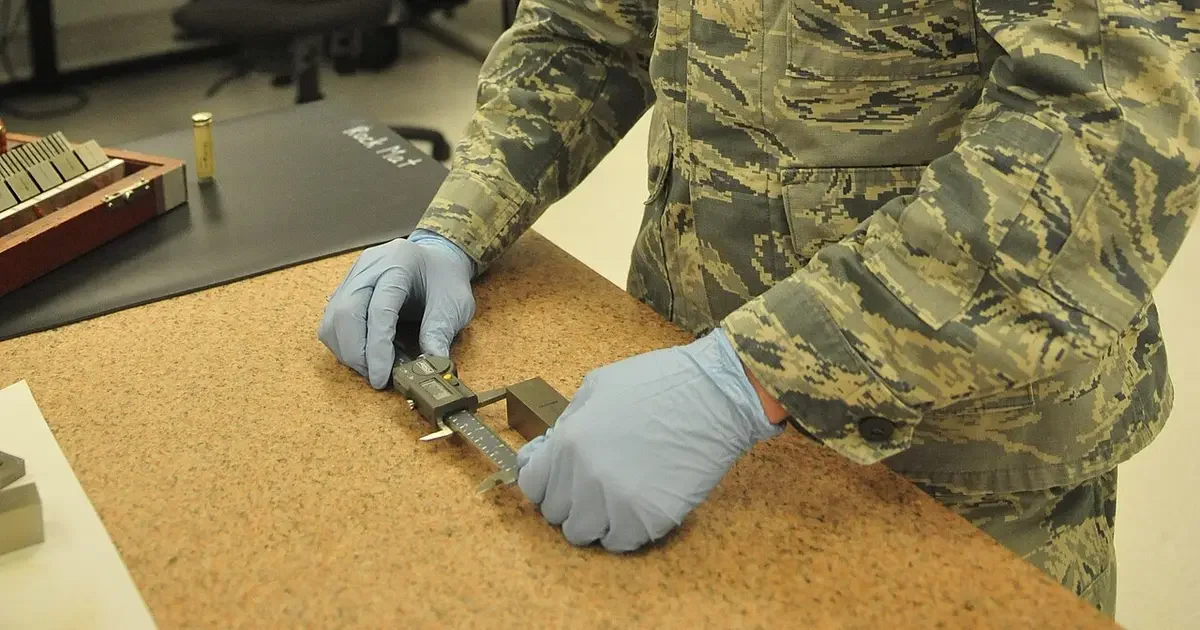
A medical OEM audit is a records audit. The auditor wants to see that what your shop says it does is what the paperwork shows, for a real lot, picked on the day. A stainless shop that can pull a complete lot pack in under an hour, show a calibrated gauge with its record and explain how a changed process gets reported to the customer will pass most of what an auditor asks. This guide is the shop-side checklist. The buyer-side view of the same documents is in the pharmaceutical parts guide.
Why the OEM audits you at all
A device maker is responsible for the finished device, including every part it buys. The rule behind this is the FDA Quality Management System Regulation, which took effect on 2 February 2026 and incorporates ISO 13485:2016 by reference. Section 820.7 lists ISO 13485:2016 for sections 820.1, 820.3, 820.10, 820.35 and 820.45, and section 820.10 requires a documented quality management system that complies with it. The purchasing clauses of ISO 13485 are 7.4.1 to 7.4.3. They are not copied into the text we read, but the audit approach of the Medical Device Single Audit Program (MDSAP), a document FDA hosts and the auditing organisations use, maps its purchasing tasks to those clauses, and it is the best public view of how auditors think about suppliers. It is an MDSAP document, not FDA’s own inspection method: FDA stopped using its Quality System Inspection Technique (QSIT) on 2 February 2026 and now inspects under Compliance Program 7382.850. The revision we read (P0002.009, 6 August 2024) predates the QMSR, and later revisions replace its Quality System Regulation references, so check the current revision before quoting a task number to a customer.
Three points from it matter to a shop.
- The extent of control depends on the part. The maker categorises suppliers by the effect the supplied product has on the finished device. A shop machining a structural pin gets more scrutiny than one machining a cosmetic cover. The audit approach warns against a “one-size-fits-all” approach to suppliers.
- Certificates are not the whole evaluation. A device maker may consider third party certification, but it should not rely on it exclusively when first evaluating a supplier. It can use audits, first-article inspections, surveys and past history instead.
- Auditors pick supplier files to examine. Indications of problems with supplied product, suppliers of higher risk parts, newly approved suppliers and suppliers of processes that need validation are the priority criteria the audit approach lists. Your shop’s file is in that pile whenever a part has caused a complaint.
None of this makes your shop subject to FDA inspection by itself. It means the OEM will ask you for evidence that fills its supplier file. If you want the shop-side context on certificates, read the ISO 13485 against ISO 9001 guide.
The checklist, by audit area
| Audit area | What the OEM wants to see | Evidence a shop should have |
|---|---|---|
| Supplier evaluation | That you can meet the specified requirements | Equipment list, scope of your certificates, first article report, a completed supplier survey |
| Purchase requirements | That you hold the current drawing, material and finish callouts | Order review record, drawing revision on the traveler, written agreement on what the order includes |
| Change notice | That you will tell the customer before you change the product | A signed agreement and a log of changes proposed |
| Traceability | That a heat number or lot follows the part | Traveler with heat and lot, tagged stock, one folder per lot |
| Acceptance | That parts were checked before they shipped | Inspection records, certificate of conformance, final check signed by a second person |
| Measuring equipment | That gauges are calibrated and controlled | Calibration records traceable to a national or international standard, an out-of-tolerance procedure |
| Outsourced processes | That passivation, cleaning or heat treatment are controlled | Subcontractor approval, process certificate, test result |
| Nonconformance | That problems are contained and corrected | Nonconformance log, root cause, corrective action record |
| Records | That records are kept and can be found | A retention rule agreed per customer, retrievable by lot |
Supplier evaluation and the file the OEM keeps
The OEM must keep records of how it evaluated you, the result and whether you were found acceptable. You can make that easy. Send the same short pack every time: company details, equipment list, grades you cut, certificates you hold written with their scope, and one first article report on a comparable part. A CMM report that a buyer can read in two minutes does more than a brochure.
State only certificates you hold. If you hold none, write “none” and describe the controls you do run. A buyer will check, and a false line ends the relationship.
Purchase requirements and the change notice
The audit approach says purchasing information should describe the product and, where possible, include an agreement that the supplier will notify the maker of changes that may affect the finished device. The maker then approves or rejects the change. Agree in advance what counts as a change. Examples a shop might propose are a new bar source, a different passivation house, a new machine for the job, a changed fixture or a move of production to another site. The reason to write the list down is that most changes are made for sound reasons by people who did not think to ask.
Traceability
The audit approach gives the maker the job of setting traceability procedures, scaled to the risk. For parts whose failure could cause serious injury, and for implanted or life-supporting devices, the maker must run a traceability system, and components and materials that could cause the device to miss its requirements must be controlled and traceable. For a shop this means one lot number per job, the heat number written at the first operation and carried to every later sheet, and tagged remnants. The full method is in the document pack guide.
Measuring equipment
The audit approach says calibration of monitoring and measuring equipment must be traceable to a national or international measurement standard if one is available. If a supplier performs the calibration, the supplier controls apply to it. It also expects a procedure for what happens when a gauge is found out of tolerance: which parts measured with it since the last good check are at risk, and who decides. Keep a calibration list with due dates, and keep the certificate for every gauge that measures a dimension on the drawing.
Outsourced processes
When a process needs validation and a supplier performs it, the maker is expected to review the validation data to confirm the process is effective, reproducible and stable. In a stainless shop that usually points at passivation and cleaning. The maker may ask for your approval records on those subcontractors, so follow the passivation subcontractor audit guide and keep the results. The cleaning guide covers the steps between machining and packing.
Nonconformance and supplier monitoring
The maker is expected to monitor supplier performance on actual quality, not on price and delivery alone. The audit approach lists supplier re-audits, incoming inspection statistics, complaints and nonconformities tied to supplied product and the supplier’s responses to corrective action requests as examples. Re-evaluation happens at intervals matched to the importance of the product. If a part from your shop is behind a complaint, expect more attention. Have a log of your own nonconformances, with cause and action, so you are not building it for the first time during the audit.
On the day
- Ask what lots and records the auditor wants to see. If the notice names a part number, pull that lot pack and one other at random before the visit, so you know what is in them.
- Show records, then the floor. Walk the path of a lot: stock tag, saw, traveler, machining, inspection, finishing, packing. Point at the heat number at each step.
- Do not fix records during the audit. A late entry is worse than a gap you admit. Write the gap down and answer it afterwards with a cause and a fix.
- Say what you do not do. If you do not validate a process or cannot meet a clause, say so. A confident wrong answer becomes a finding about honesty.
- Keep one person speaking for the shop. The same voice avoids two answers to the same question.
Need a quote for this part? Get a quote for your stainless parts
After the audit
A finding needs a written answer by the date the auditor gives. Give the cause you found, the containment for parts already shipped, the correction, and the check that proves it worked. A narrow answer that proves the point is better than a long one that changes the subject. Then update the shop procedure that failed, so the same finding does not return in the next audit.
What a shop should not claim
- A certificate you do not hold, or one held by a subcontractor and not by you.
- That your parts are approved for a device. That is the maker’s regulatory status.
- A record period you invented. Ask the customer and write it down.
If medical stainless work is regular business for you, apply as a partner shop. Our work requests show the grade, finish and certificates the buyer wrote, and we reply within 24 business hours. We hold no certificates for shops.
Sources
- FDA, Quality Management System Regulation (QMSR)
- Cornell LII, 21 CFR 820.7, incorporation by reference
- Cornell LII, 21 CFR 820.10, requirements for a quality management system
- MDSAP Audit Approach, MDSAP AU P0002.009, revision of 6 August 2024 (hosted by FDA; later revisions exist)
- FDA, Quality Management System Regulation FAQ, on QSIT no longer being used
- Wikimedia Commons, precision measurement equipment laboratory photo, image source

Rules differ by customer and market. Confirm the requirements in your quality agreement with the buyer.
Frequently asked questions
What does a medical device maker audit at a stainless machine shop?
The device maker checks that your shop can keep meeting its purchase requirements. Expect questions on how drawings and revisions are controlled, how heat numbers follow the part, how gauges are calibrated, how nonconformances are handled and how you tell the customer about changes. The depth depends on how much the part matters to the device.
Do I need an ISO 13485 certificate to pass a medical supplier audit?
Not as a rule. The MDSAP audit approach says a device maker may consider a supplier's third party certification but should not rely on it alone when first evaluating that supplier. Many OEMs still set their own rule, so read the quality agreement. If you hold no certificate, say so plainly and show the records instead.
How long should a shop keep records for a medical order?
Follow the quality agreement or purchase order. The MDSAP audit approach gives the device maker's own benchmark as the device lifetime and not less than two years from release. That applies to the maker's records, so ask the customer for your period in writing and keep the lot pack at least that long.
What should a shop do with an audit finding?
Answer it in writing by the date given. State the cause you found, the containment for parts already shipped, the fix and how you will check the fix worked. A finding answered with a clear cause and evidence usually does less harm than a clean audit with slow, vague replies later.
Need a quote for this part?
Send the drawing. We read it, send one itemised quote within 24 business hours and place the work with a partner shop that cuts stainless.
Get a quote for your stainless partsFigures in this guide are published specification limits or published typical values for the alloy, not measurements of any part. Machinability is rated against free-machining carbon steel B1112 at 100 and PREN is chromium plus 3.3 times molybdenum plus 16 times nitrogen. The conventions are set out in thereference section and the editorial standards.