Running an internal audit in a stainless shop that serves medical and food buyers
November 21, 2026
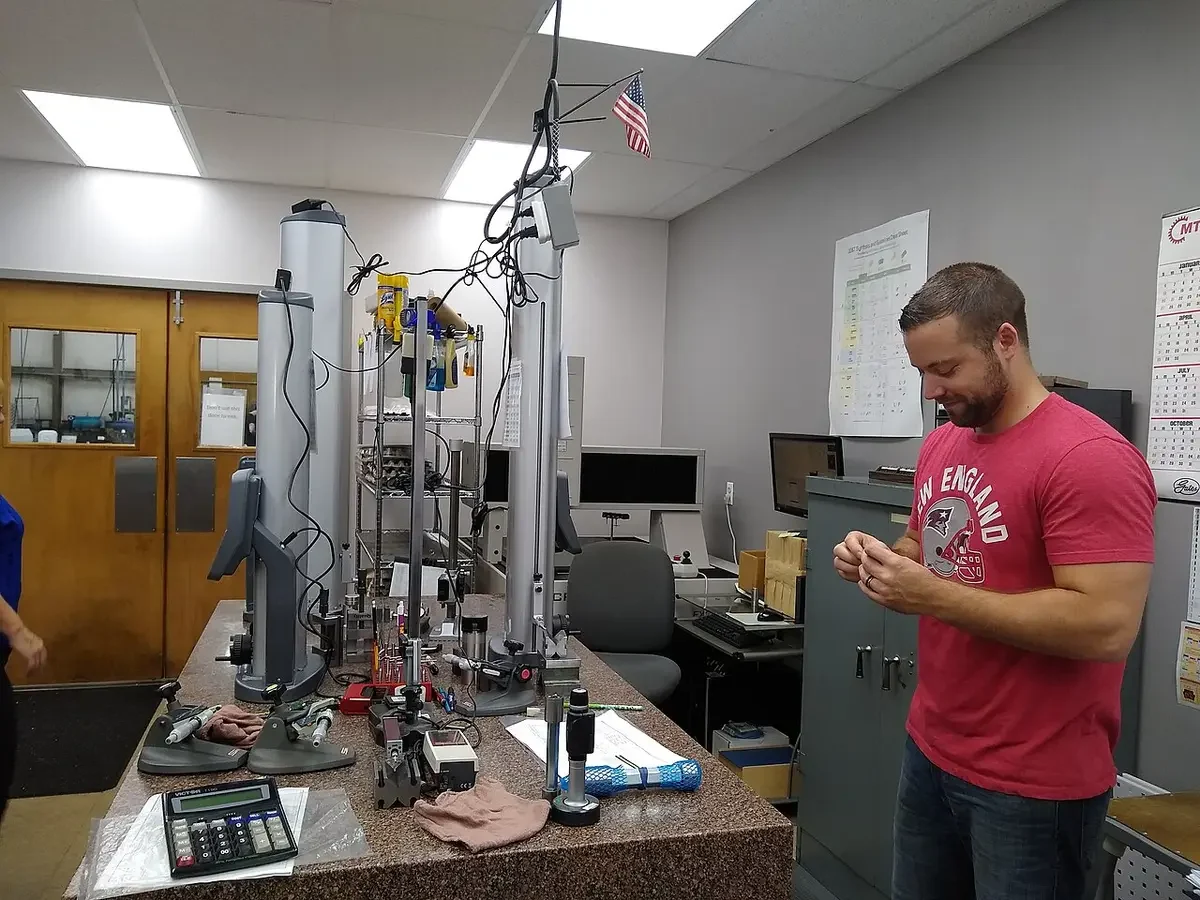
A medical or food buyer will audit your records sooner or later. The cheapest way to pass is to audit them yourself first, on your own dates, with a sample you choose. This guide is for the owner or quality person of a small stainless shop. It shows a plan for one year, what to sample, how to write findings that lead to action and how to check they stay closed. It is about your own audit. For the customer’s audit, read the medical supplier audit checklist.
Internal audit versus the customer’s audit
An internal audit is a planned check that your own system does what your own procedures say. ISO 9001:2015 clause 9.2 asks for audits at planned intervals to find out whether the quality system conforms to the organisation’s own requirements and to the standard, and whether it is effectively implemented. The FDA’s MDSAP audit approach, which covers ISO 13485:2016 clause 8.2.4, describes internal audit as a systematic and independent examination done at defined intervals.
There are three differences from a customer audit.
- You pick the sample. A customer audit looks at the lot the buyer chose, often a part with a past complaint. You can choose the lots with the highest risk.
- You set the timing. The audit happens when the shop can fix what it finds.
- The result stays with you. Findings are an input to your improvement and your management review, not to the buyer’s supplier file.
ISO 19011 gives guidance on auditing management systems, including auditor competence. The 2018 edition has been replaced by ISO 19011:2026, published in May 2026, so use the current edition if you read it.
An audit plan for a small shop
Plan the year in one page. Cut the shop into areas, give each area a month and a person, and keep the person away from his own area.
| Area | ISO 9001:2015 clause | Month | Auditor |
|---|---|---|---|
| Order review and drawing revision control | 8.2.3, 7.5 | February | Quality |
| Bar purchasing and incoming checks | 8.4 | February | Production lead |
| Identification and traceability (heat numbers) | 8.5.2 | May | Planner |
| Machining and change control | 8.5.6 | May | Quality |
| Cleaning, passivation and packing | 8.5.4, 8.4 | August | Planner |
| Measuring equipment and calibration | 7.1.5 | August | Production lead |
| Inspection, release and certificates | 8.6 | November | Planner |
| Nonconforming parts and corrective action | 8.7, 10.2 | November | Quality |
| Training and competence | 7.2 | November | Production lead |
| Results into management review | 9.3 | December | Owner reviews, quality presents |
This is a template, not a requirement. A shop with one machine and four people can audit two areas in an afternoon. The point is that every area is looked at once a year, the areas that serve medical or food work more often and the auditor is not the person who runs the area. ISO 9001:2015 clause 9.2 asks for the audit programme to take account of the importance of the processes, changes affecting the organisation and results of previous audits. If you changed your bar supplier this year, move bar purchasing forward.
For each audit, write the criteria and the scope on the plan before you go: for example “criteria: our procedure for heat number control; scope: the last 10 lots of 316L”. Keep the plan and the report as records. Clause numbers refer to the 2015 edition. ISO 9001:2026 was published in September 2026, and an Advisera comparison lists clause 9.2.2 with a new requirement to set a defined objective for each audit, so check the edition your customer cites.
What to sample: heat numbers, passivation certificates, calibration, NCRs
An internal audit is a sample of records and a walk through the floor. Pick lots from the last three months, mixing grades and customers, and follow each lot start to finish.
- Heat numbers. Open the traveler for three lots. Is the heat number written at the first operation and carried to every later sheet? Does it match the mill certificate? See the documentation pack guide.
- Passivation and cleaning. For each lot, is there a certificate that names the method, the lot and the test? For work done outside, is the finisher on your approved list? The subcontractor audit checklist is the matching tool.
- Calibration. Take five gauges from the floor. Is each one in the calibration list and in date, with its certificate on file? Find one that is not on the list and ask why.
- Nonconformance records. Open the last three. Does each have a cause, a containment for parts already shipped and a corrective action with a date?
- Changes. Did anything change for a medical or food customer this year, such as the bar source, a machine, the cleaner or the finisher? Is there a notice to the customer and an approval?
The FDA’s audit approach also says the audit should confirm that internal audits include auditor training and independence, corrections, follow-up and verification of corrective actions. Ask yourself if your plan would show each of these to a customer who asked.
The audit checklist: 18 questions with stainless examples
Print the list and tick each one with evidence, not with memory.
- Is the drawing revision on the traveler the current one for the customer? (Check three open jobs.)
- Does the order record show the grade, the bar standard and the certificate level asked for? (For example 316L to ASTM A276 with a mill certificate for the heat.)
- Was the order reviewed before acceptance, including finish, tolerances and packing?
- Is the bar bought from an approved source, and is the heat number on the receiving record?
- Does the mill certificate match the grade on the order, and is it filed with the lot?
- Are remnants tagged with their heat number after cutting, so a leftover piece is never “some 316”?
- Is the heat number written at the first operation and carried to every sheet?
- Is the work instruction for the job at the machine, at the current revision?
- Was the first article approved and recorded before the lot ran?
- Was any change made to machine, tool, fixture, program or site, and was the customer told if the order requires it?
- Are parts protected from carbon steel contact, scratches and contamination between steps?
- Is the cleaning step done to the agreed method, and is it recorded?
- For passivation, is the method, the lot and the test recorded, and does the certificate return with the lot?
- Are all gauges used for the job in the calibration list, in date and traceable?
- Is final inspection recorded and signed by someone who did not make the part?
- Is a certificate of conformance issued from the records, not typed from memory?
- Are nonconforming parts tagged and kept apart, and were shipped parts checked for the same fault?
- Were last year’s corrective actions closed, and did the fix hold?
Add questions for any customer-specific requirement in your quality agreements, such as cleanroom packing or a record period.
Need a quote for this part? Get a quote for your stainless parts
Writing findings that lead to action
A good finding has three parts: the requirement, the evidence and the gap. Write them so someone who was not there can understand them.
Finding 2026-Q3-04. Requirement: the traveler carries the heat number from the first operation (procedure QP-07, section 4). Evidence: in lot L-2218 (316L bar, 90 pieces) the heat number appears on the cutting sheet but not on the inspection sheet. Gap: the link from the final record to the heat number is missing. Classification: minor.
Avoid blame, vague words and several issues in one finding. Class each as major (a system failure or a risk to the customer’s product) or minor (an isolated lapse), and say why. The finding is a statement about the system, not about the person.
Closing findings and checking they stay closed
For each finding, ask the area owner for four things in writing by a date:
- Containment. What was done about parts already shipped or in stock?
- Cause. Why it happened, found by asking why until the answer is a procedure or a habit, not a person.
- Correction and corrective action. What fixes this lot and what stops the next one.
- A check. How and when the auditor will confirm the fix worked.
Do not close a finding when the action is done. Close it when the check shows it holds. Look again at the next audit of that area. The MDSAP audit approach expects the dates and results of audits, and the actions that follow, to be documented.
Feeding results into management review
ISO 9001:2015 clause 9.3 covers management review, and the MDSAP audit approach says the output of internal audits is an input to it. Keep this simple. Once a year, or after each quarter in a small shop, give the owner a one-page summary: audits done, findings by area, how many are open, which repeated and what the customers’ audits found. The owner decides what to fix, what to train and what to buy, and records the decision.
Next step
If medical or food stainless work is regular business for you, apply as a partner shop. Talk to us about the grades, finishes and records you already hold.
Sources
- The Core Solution, ISO 9001:2015 clause 9.2 explained, secondary summary of 9.2
- FDA, MDSAP Audit Approach, MDSAP AU P0002.009, Task 10 internal audit, clauses 6.2 and 8.2.4 of ISO 13485:2016
- The 9000 Store, ISO 9001:2015 clause titles, clause numbers and titles
- Advisera, ISO 9001:2015 vs 9001:2026 main differences, clause 9.2.2 change in the 2026 edition
- LRQA, ISO 9001:2026 is live, publication date 16 September 2026
- Complife Group, ISO 19011:2026 changes, 2026 edition replaces the 2018 edition
- Wikimedia Commons, Lampin Quality Assurance, image source

Customer requirements differ. Confirm what your quality agreement asks of you.
Frequently asked questions
How often should a small stainless shop run an internal audit?
ISO 9001:2015 clause 9.2 asks for audits at planned intervals under an audit programme and leaves the frequency to the shop, based on the importance of the processes and on past results. A common pattern for a small shop is one slice each quarter, so that every area is checked once a year and the risky ones twice.
Can the owner audit his own shop?
Better not, for the areas the owner runs. The standard asks for objective and impartial auditors, and the FDA audit approach expects auditors who are not directly responsible for what they audit. A small shop can swap areas between two people, or ask an outside person to audit the areas the owner controls.
Do I need ISO 13485 to serve medical buyers with an internal audit?
No rule says so for every part. The buyer's quality agreement decides. Internal audit is also an ISO 13485 requirement, clause 8.2.4, for companies certified to it. A shop that runs a plain ISO 9001 style audit and keeps good records is better placed than one that has no audit at all.
What is the difference between my internal audit and a customer audit?
You choose the scope, the timing and the sample, and you find your own gaps. A customer audit samples what the buyer cares about, on the buyer's date. Shops that audit the same records the customer samples usually have fewer surprises on the day.
Need a quote for this part?
Send the drawing. We read it, send one itemised quote within 24 business hours and place the work with a partner shop that cuts stainless.
Get a quote for your stainless partsFigures in this guide are published specification limits or published typical values for the alloy, not measurements of any part. Machinability is rated against free-machining carbon steel B1112 at 100 and PREN is chromium plus 3.3 times molybdenum plus 16 times nitrogen. The conventions are set out in thereference section and the editorial standards.