What medical and food buyers check on a stainless shop's website and samples
November 21, 2026
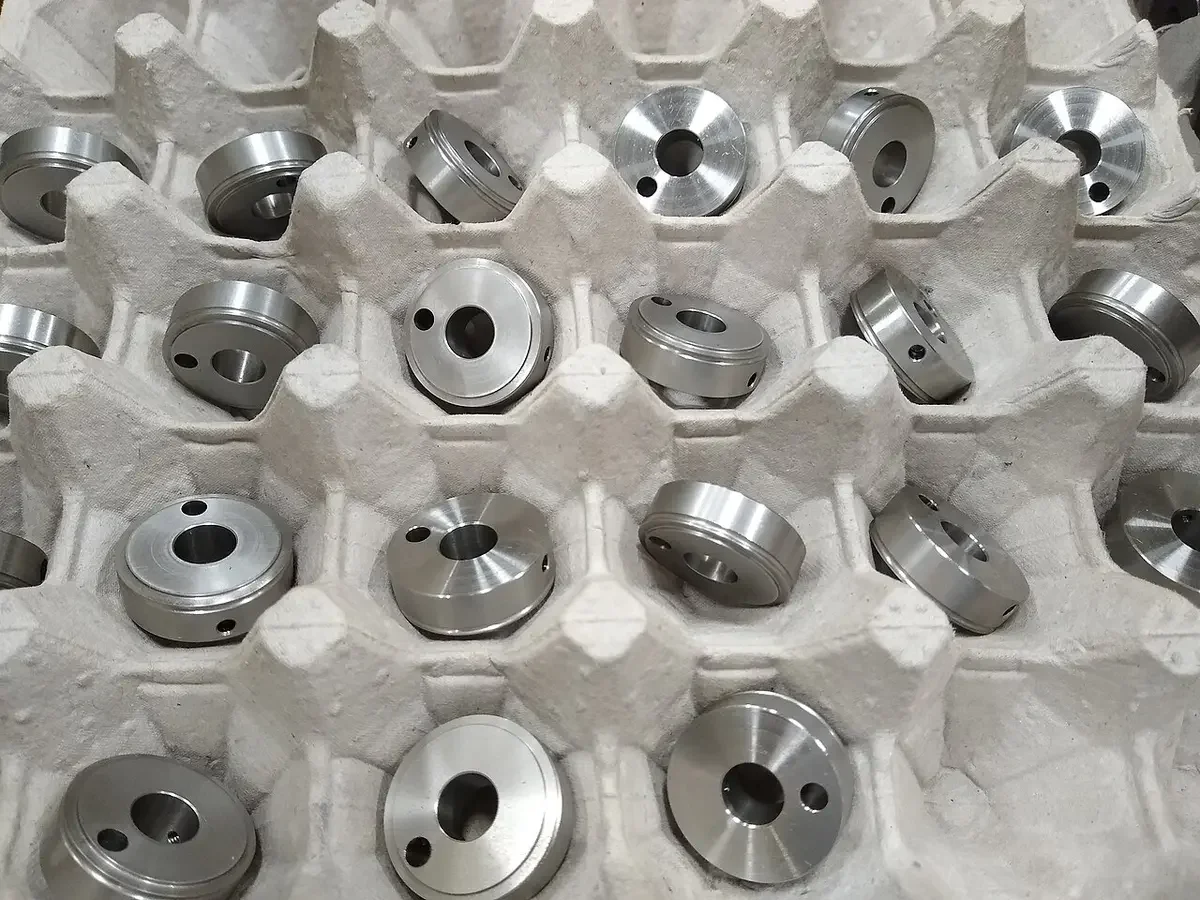
A medical or food buyer rarely starts with an audit. It starts with your website, a short questionnaire and a sample. Each step decides whether the next one happens. This guide is for the owner or sales engineer of a stainless shop and lists what a buyer screening you is likely to look at, what to publish so the answer is easy to find, what to leave out and how to pack the first sample. The audit comes later, and the medical supplier audit checklist covers it.
We do not audit shops. What follows is practical guidance for your own pages and samples, not a rule from any standard.
Why the desk check comes before the audit
A buyer qualifying a new machining supplier works from what it can see without visiting. No standard prescribes what a shop must publish. The device maker or food equipment maker sets its own criteria. For medical work, FDA’s quality system regulation (QMSR) took effect on 2 February 2026 and incorporates ISO 13485:2016 by reference. The maker’s own system therefore decides how it selects and monitors suppliers, and your shop meets that system through a questionnaire, a quality agreement and eventually an audit.
For food equipment the same logic runs on a different rule. In the United States, 21 CFR 117.40(a) says food-contact surfaces of plant equipment must be corrosion-resistant, made of nontoxic materials and adequately cleanable. The equipment maker passes that down to the parts you cut: grade, finish and proof that nothing contaminates the surface.
So the website has one job in this stage: let a buyer see quickly that you work with the grades, finishes and records its project needs. It does not need to be long.
What a buyer screening your website looks for
| What the buyer wants to know | Where it should be answered | Wording that helps | Wording that hurts |
|---|---|---|---|
| Which stainless you cut | Capability page | A list by grade and condition: 303, 304L, 316L, 17-4 PH in H1025 | “All stainless steels” |
| What you do in house | Capability page | “Turning, milling, deburring and passivation in house; electropolishing outsourced” | Silence about the finishing route |
| Which certificates you hold | Quality page | Standard, certification body, certificate number, scope and expiry date | A logo with no number |
| What you inspect with | Quality page | Gauge types, CMM, surface roughness tester, with the report format you issue | “State of the art equipment” |
| Which records come with a lot | Quality page | Mill certificate, dimensional report, passivation record, packing list | “Full traceability” with no detail |
| Who you have worked for | Not on the site | Nothing unless the customer agrees in writing | Logos and client names without permission |
Three of those rows deserve more space.
Certificates. ISO does not perform certifications and does not accredit certification bodies. Accredited certification bodies issue the certificates. A buyer can check a claim in the IAF CertSearch database, which covers only certificates from accredited bodies. If your certificate is not in that database, expect the buyer to ask who issued it. Publish the number and the scope exactly as printed, and take the page down the week the certificate expires. A trade article from a contract fabricator, which is a vendor and therefore directional, makes the same point: ISO 9001 alone is often not enough for medical contract work, and buyers read the scope on the certificate.
Regulatory status. A shop that makes components for finished medical devices is generally outside device establishment registration. 21 CFR 807.65(a) exempts a maker of raw materials or components used in the manufacture or assembly of a device, if it would not otherwise need to register. So “FDA registered” on a machine shop’s site is a claim a careful buyer will question. Do not write it, and do not write that your parts are “FDA approved”. Say which materials you cut and which records you keep, and leave the device status to the device maker. The same goes for “medical grade” with no standard behind it.
In house or outsourced. The finishing route is the part of a stainless job that buyers care about most. They want to know who passivates, who electropolishes and who cleans, because that is where a validated process sits. Say plainly what you do yourself and name the process, for example citric passivation to ASTM A967. If a subcontractor does it, say that too. Buyers find out anyway, and a shop that hid it looks worse than one that listed it. The passivation subcontractor audit guide shows how to control the ones you use.
What to leave off the website
- Claims you cannot document on the day. If the buyer asks for the record behind a sentence and it takes you a week to find, remove the sentence.
- Superlatives. “Best quality” and “zero defects” tell a quality manager nothing and invite the question of how you measure it.
- Customer names and part photos from other buyers’ drawings. Your confidentiality terms with that customer probably forbid it. The NDA guide explains what a buyer expects you to protect.
- Prices and lead times that you cannot hold. A buyer who reads a number takes it as a commitment.
- A generic list of every industry. A shop that says it serves medical, aerospace, food, oil and gas, and consumer products gives the buyer no way to judge fit. Pick the ones you can document.
Need a quote for this part? Get a quote for your stainless parts
Samples: what the buyer reads in the parcel
A sample is read as evidence of the process, not only of the part. The buyer opens the box, looks at the parts, then reads the paper. For a stainless sample to carry weight, treat it like a small production lot.
- Several pieces, not one. One good piece shows you can make one. Three to five shows a process holds. The buyer measures a few and compares them with each other.
- The grade proved on paper. Include the mill certificate for the heat the pieces came from, with the heat number on the certificate matching the marking or tag. A trade guide to EN 10204 notes that a 3.1 certificate does not automatically include PMI or corrosion tests, so say what the certificate covers and what you added. The mill certificate guide shows what a buyer checks on one.
- A dimensional report on the drawing. Measure the characteristics the drawing calls out, state the instrument and report actual values, not “OK”. The CMM report guide shows the layout buyers read.
- The finish stated and recorded. If the print asks for Ra, report the measured Ra and the method. If it asks for passivation, include the record. ASTM A967 lists seven practices, from water immersion and high humidity to copper sulfate and potassium ferricyanide-nitric acid, and it describes them as qualitative tests that confirm passivation was effective. Name the practice you used on this lot, not only “passivated”.
- Clean parts, packed as you would ship them. Edges deburred, no chips in blind holes, no fingerprints or staining and the bag, tray or label you would use on the order. For medical and food buyers the packing says as much as the parts do. See the guides on cleaning medical stainless parts and cleanroom packaging.
- A short cover note. The part number and revision, the lot, the date, the material standard, who inspected and where the shop deviated from the drawing, if anywhere. Admit deviations. A buyer who finds an unmentioned one will doubt the rest.
Avoid sending a sample that was made differently from production, for example a hand-finished piece when the order will be tumbled. The buyer will qualify the process it sees, and a gap between sample and order becomes a corrective action later.
Before you hit send
- Open the website as a stranger and find the grades, certificates and finishing route in under a minute.
- Check every certificate number against the issuing body’s record and the expiry date.
- Remove any claim you could not back with a record the same day.
- Check that each piece in the sample matches the heat number on the paperwork.
- Have the second person in the shop read the cover note and the report against the drawing.
A shop that passes this desk check usually gets a questionnaire next. The internal audit guide helps you prepare for the records that come after it.
Talk to us
If you cut stainless for medical or food buyers and want to know how partner shops work with us, read the partner shops page and talk to us. We hold no certificates for anyone, and each shop states its own.
Sources
- FDA, Quality Management System Regulation (QMSR)
- Cornell LII, 21 CFR 807.65, exemptions from registration
- Cornell LII, 21 CFR 117.40, equipment and utensils
- ISO, how to verify an accredited certification
- ASTM International, A967/A967M-25 chemical passivation treatments for stainless steel parts
- Saky Steel, EN 10204 3.1 certificate for stainless steel, what buyers need, supplier blog, directional
- Fabcon, contract manufacturing for medical devices, vendor article, directional
- Wikimedia Commons, Lampin Components 1 photo, Whoisjohngalt, CC BY-SA 4.0

Rules differ by customer and market. Confirm the requirements in your quality agreement with the buyer.
Frequently asked questions
What do buyers look at first on a stainless machine shop's website?
Usually three things: which grades and processes you list, which certificates you claim and how you describe what you do in house against what you outsource. A buyer screening several shops uses the site to decide who gets a questionnaire or a sample request, so a page that names the grades, the finishing route and the records you keep saves a round of email.
Should I put my ISO certificate on my website?
Only if you hold it. Name the standard, the certification body, the certificate number and the scope, so the buyer can look it up. ISO does not issue certificates itself, and the IAF CertSearch database shows certificates issued by accredited bodies. A vague badge with no number looks worse than no badge.
Do I need to say I am FDA registered?
No, and do not say it unless it is true. Under 21 CFR 807.65(a) a maker of components for finished medical devices is exempt from device establishment registration if it would not otherwise need to register. The device maker holds the regulatory status. Describe what you make and what records you keep instead.
What should a first sample for a medical or food buyer include?
Several pieces made the way you would make the order, with the paperwork you would ship: mill certificate for the heat, a dimensional report on the drawing characteristics, the passivation or cleaning record naming the method and the packing you would use. The buyer judges the process and the records as much as the parts.
Need a quote for this part?
Send the drawing. We read it, send one itemised quote within 24 business hours and place the work with a partner shop that cuts stainless.
Get a quote for your stainless partsFigures in this guide are published specification limits or published typical values for the alloy, not measurements of any part. Machinability is rated against free-machining carbon steel B1112 at 100 and PREN is chromium plus 3.3 times molybdenum plus 16 times nitrogen. The conventions are set out in thereference section and the editorial standards.