Building a food and medical document pack from the shop floor: what goes in, who signs it and how long to keep it
November 14, 2026
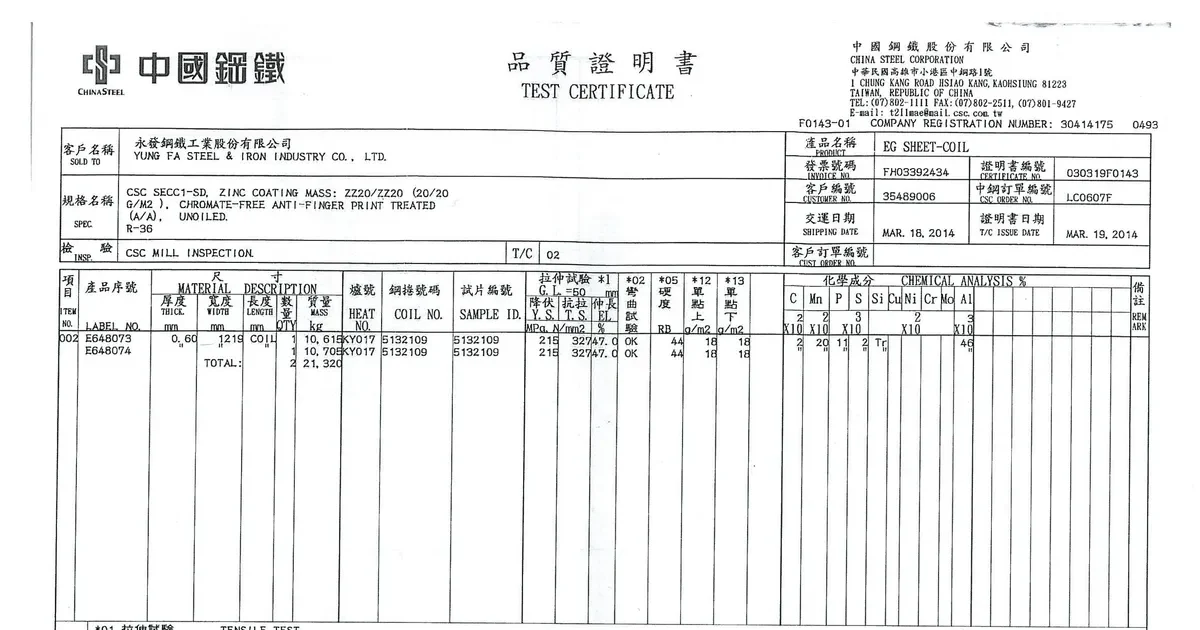
Food and medical buyers do not ask for one document. They ask for a pack, and they ask for the same pack on every lot. A shop that builds it once as a system, from the traveler outward, answers any request in minutes. A shop that assembles it by hand for each order loses hours and eventually gets a number wrong. This guide is for the shop owner or quality lead who wants the pack to be a by-product of the job, not a separate job. The buyer-side view of the same documents is in the pharmaceutical parts guide.
What the rules ask a shop to hold
No single rule says “a stainless shop must keep these ten documents”. The requirements come from the buyer and sit on top of two public frames.
Food contact, EU. Regulation (EC) 1935/2004 says the traceability of food contact materials and articles must be ensured at all stages. Business operators need systems and procedures to identify the businesses from which and to which materials are supplied, and the materials need labelling or identification that allows traceability. For materials covered by specific measures it also requires a written declaration of compliance with supporting documentation available to authorities on demand. Annex I of the regulation lists “Metals and alloys” among the groups that may be covered by specific measures. The European Commission’s food contact page names plastics and ceramics as examples of specific EU legislation and refers to national legislation for other materials, so ask the buyer which rule they apply to a stainless component.
Regulation (EC) 2023/2006 on good manufacturing practice applies to all sectors and stages of manufacture of the materials in that Annex. It asks operators to keep documents on specifications and processing, plus records of manufacturing operations and quality control results, available to authorities on request, with a quality assurance system scaled to the size of the business. The text we read gives no retention period.
Medical devices. The FDA hosted audit approach for the Medical Device Single Audit Program says the device maker must control suppliers and outsourced processes, and must apply both purchasing controls and acceptance activities. It also says the maker must hold records for at least the lifetime of the device and not less than two years from release. Those are the maker’s duties. Yours are whatever the quality agreement and purchase order pass down. The same document expects the maker to have documented product cleanliness requirements, which become your cleaning and packaging instructions.
The practical reading is that your pack is evidence for your customer’s records. Design it so they can lift it into theirs.
The pack, line by line
| Document | Where the record starts | Signed by | The trap |
|---|---|---|---|
| Order review record | Purchase order, drawing and revision, special requirements | Quality or sales lead | Requirements on the PO that never reach the traveler |
| Material certificate | Mill certificate for the heat, filed on receipt | Mill | Heat number not carried onto the traveler. See reading a mill test certificate |
| Traveler | Job routing with lot number, heat number and operation sign-offs | Operators | Two heats in one lot with one number written |
| Inspection record | First article and final dimensions, with instrument IDs | Inspector | Gauge or CMM ID missing. See the CMM report guide |
| Finishing certificates | Passivation, electropolish or heat treatment from the subcontractor | Subcontractor | Certificate does not name the test. See the passivation test guide |
| Cleaning and packing record | Steps used, date, operator, bag and label | Operator | No record that the packing matched the order |
| Calibration list | Certificates for each instrument used on the lot | Quality lead | Instrument out of date at the time of use |
| Nonconformance and concession | Any deviation and the buyer’s written approval | Quality lead and buyer | Verbal approval that nobody can find later |
| Certificate of conformance | Cover sheet: PO, revision, quantity, lot, standards | Authorised person | Wording that claims a certificate the shop does not hold |
| Packing list | Quantity, lot and heat on the carton | Shipping | Lot on the bag but not on the carton |
The ISO 13485 against ISO 9001 guide explains how buyers read your certificates. Only state certificates you hold, and write them with their scope. A buyer will check.
Build it from the traveler
The failures in the table share a cause: the information was in someone’s head or on a loose sheet when the step happened. So build the pack from the job itself.
- One lot number per job and per heat. If a job uses two heats, split it into two lots. A pack that says “heats A and B” for 200 parts cannot tell which heat a failed part came from.
- Write the heat number at the first operation. The bar leaves the rack with its tag. The heat goes onto the traveler at the saw and is carried to every later sheet. If you cut remnants, tag them before they go back to the rack. A remnant of unknown origin has no certificate.
- Put requirements where operators see them. Cleaning, finish, packaging and marking lines from the PO go on the traveler, in words, not on a separate email.
- Log subcontract steps with the lot. The parts leave with a purchase order that names the standard and the test, as the passivation audit guide describes. The certificate comes back to the same folder.
- One folder per lot. Name it by purchase order, line and lot, with the same name in paper and in digital form. Put an index sheet on top listing every document and who signed it.
- A last check before shipping. One person reads the index against the PO and signs that the pack is complete. A missing page found here costs minutes. Found by the buyer, it costs the order.
Test it twice a year. Pick a lot from last year and ask: can we produce its complete pack in an hour? If not, you will learn where the system leaks before a buyer does.
Need a quote for this part? Get a quote for your stainless parts
Retention and confidentiality
We found no single retention period that fits a shop. The device maker’s period (at least the device lifetime and not less than two years from release, per the audit approach) is the benchmark for medical work. The food regulation text we read names no period. Ask each buyer for the period in writing, put it in your order record and keep the pack at least that long. Keep it retrievable by lot number, not just stored. Packs often carry the buyer’s drawings, so the same NDA terms cover them.
Price it, do not give it away
A pack is office time. The quoting guide says to list the documents the buyer asked for and price them as a line, because on small lots the paperwork is a large share of the job. Agree the pack before quoting: which documents, in which format, and whether the buyer wants more than your standard set. Items such as full roughness maps or ferrite readings take real hours.
What a shop should not write
- Certificates you do not hold. If you have no ISO 13485 certificate, do not write language that implies it.
- Medical claims. Do not state that a part is approved or registered for a device. That is the maker’s regulatory status.
- A food safety claim on the part. Say what you know: grade, finish, passivation and the heat. Whether the assembly meets 3-A or EHEDG rules is the equipment maker’s decision. See the 3-A guide.
- A date you did not witness. If a subcontractor certificate has no date, send it back.
If stainless work with documents is regular business for you, apply as a partner shop. Our work requests carry the grade, finish and certificates the buyer wrote. We reply within 24 business hours. We hold no certificates for shops.
Sources
- EUR-Lex, Regulation (EC) No 1935/2004, framework regulation on food contact materials
- EUR-Lex, Regulation (EC) No 1935/2004 consolidated text with Annex I
- EUR-Lex, Commission Regulation (EC) No 2023/2006 on good manufacturing practice
- European Commission, Food contact materials
- FDA, Medical Device Single Audit Program, audit approach
- Wikimedia Commons, China Steel Test Certificate 030319F0143, image source

Rules change and national rules differ. Confirm what applies to your part with the buyer and your own compliance adviser.
Frequently asked questions
How long should a shop keep records for medical parts?
There is no single answer for a shop. An FDA hosted audit approach says the device maker must keep records for at least the lifetime of the device and not less than two years from product release. Your duty comes from the contract and the customer's quality agreement, so ask for the period in writing and do not shred a pack until it ends.
Does a shop need a declaration of compliance for food contact stainless parts?
It depends on the buyer and the market. EU Regulation 1935/2004 requires a written declaration for materials covered by specific measures, and requires traceability for all food contact materials. Metals and alloys are listed in its Annex I. The Commission page we read names specific EU measures for plastics and ceramics but not metals, so ask the buyer which rule applies.
Is a certificate of conformance enough for a medical or food buyer?
Usually not alone. It is the shop's own statement that the parts meet the order. Medical and food buyers normally also want the material certificate with the heat number, the finishing certificates and the inspection record, tied to the same lot number. The certificate of conformance is the cover sheet of the pack, not the whole pack.
Can I put the pack together after the parts ship?
Only if the records already exist. A heat number that was not written on the traveler, a passivation lot not logged or an instrument not recorded cannot be reconstructed honestly after the fact. Build the pack at each step of the job and do the final check before the parts leave.
Need a quote for this part?
Send the drawing. We read it, send one itemised quote within 24 business hours and place the work with a partner shop that cuts stainless.
Get a quote for your stainless partsFigures in this guide are published specification limits or published typical values for the alloy, not measurements of any part. Machinability is rated against free-machining carbon steel B1112 at 100 and PREN is chromium plus 3.3 times molybdenum plus 16 times nitrogen. The conventions are set out in thereference section and the editorial standards.