Onshore or offshore stainless machining: cost, lead time and paperwork
November 21, 2026
An offshore quote is lower on the shop line and higher on every line around it, and whether the total comes out lower depends on freight, duty, stock and risk that the quote does not show. This guide compares onshore and offshore machining of stainless parts on landed cost, lead time and paperwork, and lists what to ask each shop so that the two quotes sit on the same basis. It does not give a typical price gap, because we found no public source for one.
Duty and regulation points below are as published on the dates stated, and a customs broker should confirm them for your parts.
Price both options as landed cost
A shop quote covers the part at the shop gate. What you pay includes everything between that gate and your dock. The Reshoring Initiative, a US non-profit, publishes a total cost of ownership estimator that calculates 30 cost factors per source, including overhead, risks such as intellectual property and political stability, freight rates and wage and currency changes. It states that companies who decide on price alone often miscalculate actual offshoring costs by 20 to 30 percent. That is an advocacy group’s claim and not a measurement, so use it as a reason to build your own sheet and not as a number.
A landed cost sheet for one part, with the same drawing and the same quantity for each option:
| Line | Onshore shop | Offshore shop | Note |
|---|---|---|---|
| Part price at the shop | Quote | Quote | Same drawing revision, grade, finish and quantity |
| Tooling and fixtures | Quote | Quote | Who owns them and where they stay |
| Material premium | In quote | In quote | Ask for the alloy surcharge basis. See nickel surcharges |
| Outside finishing | In quote | In quote | Passivation and cleaning, with the record |
| Inspection and reports | In quote | In quote | CMM report scope and sample size |
| Freight and insurance | Local carrier | Ocean or air plus origin charges | Depends on the delivery term |
| Customs duty and fees | None on domestic goods | Duty on customs value plus entry fees | Confirm with a broker |
| Inventory in transit | Short | Longer pipeline to fund | Longer lead time means more stock |
| Rework, return and expedite | Local fix | Reship, or fix at your cost | Price the risk, not zero |
Fill the sheet for your own part. Each shop can supply its own line, and your broker and forwarder supply freight and duty.
Lead time is a sum with a pipeline attached
Our guide to stainless machining lead time lists where the weeks go: bar, machining, outside finishing, inspection and freight, and it found no public figure for machine time. For an offshore order add transit, port handling and customs clearance, and ask your forwarder for current transit and the shop for its ship date. We do not give a transit figure here because it moves with the route and the season.
The difference you will feel is in the length of the pipeline. A longer pipeline means more parts on the water, a slower response to an engineering change, and a bigger stock buffer to keep a line running. Price that stock buffer in the landed sheet, and decide how you would expedite a late lot and who would pay.
Duty: what the destination changes
In the United States, Proclamation 11021 of 2 April 2026 applies Section 232 duty to the full customs value of listed steel articles entered from 6 April 2026, so the machining value is inside the base. Our guide to Section 232 on stainless parts shows which headings fall in which tier and the weight rule. Lists and rates changed again with the proclamation of 1 June 2026, and a broker should confirm the 10-digit classification for your part.
In the European Union, the carbon border mechanism applies to some steel goods, and our CBAM guide covers what an importer needs from an offshore shop. A shop inside the same customs area as you has no import duty on the part, but may still pass through the steel’s own origin rules, covered below.
Duty is a function of classification and origin, not of the shop’s location alone. Two shops in the same country can ship parts with different classifications if the parts differ.
Paperwork: what comes with the box
An offshore order adds documents that a domestic order may not need. Specify the set on the order:
- Commercial invoice and packing list, with the classification code and a clear description of the part.
- Material certificate with heat number, and the country of melt and pour. See reading a mill test certificate.
- Certificate of conformance, inspection report and finish record, as in the documentation pack.
- Country of origin marking. US Customs and Border Protection says every foreign-origin article entering the United States must be legibly marked with the English name of the country of origin unless an exception applies, in a conspicuous place that can be seen with casual handling. CBP does not set out on that page how origin is decided for parts machined from imported bar, and suggests a binding ruling for hard cases. Ask the shop to mark parts to your instruction and ask a broker how origin applies to yours.
- Delivery term. The ICC Incoterms 2020 rules, eleven three-letter terms, define buyer and seller responsibilities and allocate cost, risk and obligations. Name the term and the named place on the order, so that two quotes are priced to the same point. If one quote says delivered to your dock and another says delivered to a port, they are not comparable.
Need a quote for this part? Get a quote for your stainless parts
The steel does not stay at home
Onshore does not make bar origin go away. CBP’s steel and aluminium FAQ, marked as updated on 11 June 2025, says the entry system requires the country of steel melt and pour to be reported for steel derivative classifications. A domestic shop that buys imported bar has a steel origin question just as an offshore shop does, and your own customer or your importer may need the answer. Ask every shop where its bar was melted and for the certificate that shows it. Our post on melt and pour origin documents covers what to ask for.
Quality and communication
These factors rarely appear on a quote and show up in the first lot:
- Time zones and handover. A question on Monday may be answered on Tuesday. Agree a contact, a response rule and a weekly update for the first order.
- Drawing interpretation. Different drawing conventions cause different readings. Add a one-page requirement sheet with datums, finish and inspection scope.
- First article. Order a first article before the first production lot, and compare reports. See dual sourcing for qualifying a second shop.
- Remedy. Agree what happens to a nonconforming lot: where it is sorted, who pays and how fast a replacement ships.
- Intellectual property. Use a signed NDA for the drawing. See what an NDA covers.
A way to decide
Quote the same part in both places on one landed cost sheet and a single delivery term. If the offshore total does not beat onshore by enough to cover the longer pipeline and the extra risk, stay onshore. If it does, start with a first article and a small lot, and keep a second source live. The sheet needs your own numbers, and no general rule replaces them.
Next step
Send the drawing through the RFQ form and say which delivery term and destination you want priced. We send one itemised quote within 24 business hours and place the work with partner shops that cut stainless. You deal with one contact, and we answer for the parts. Our guide to what to put in a stainless RFQ lists the lines that make quotes comparable.
Sources
- Reshoring Initiative, Total cost of ownership estimator, advocacy group, directional
- Proclamation 11021, Strengthening Actions Taken to Adjust Imports of Aluminum, Steel, and Copper, 2 April 2026 (govinfo)
- CBP, Section 232 aluminum and steel FAQs
- CBP, Marking of country of origin on US imports
- ICC, Incoterms 2020
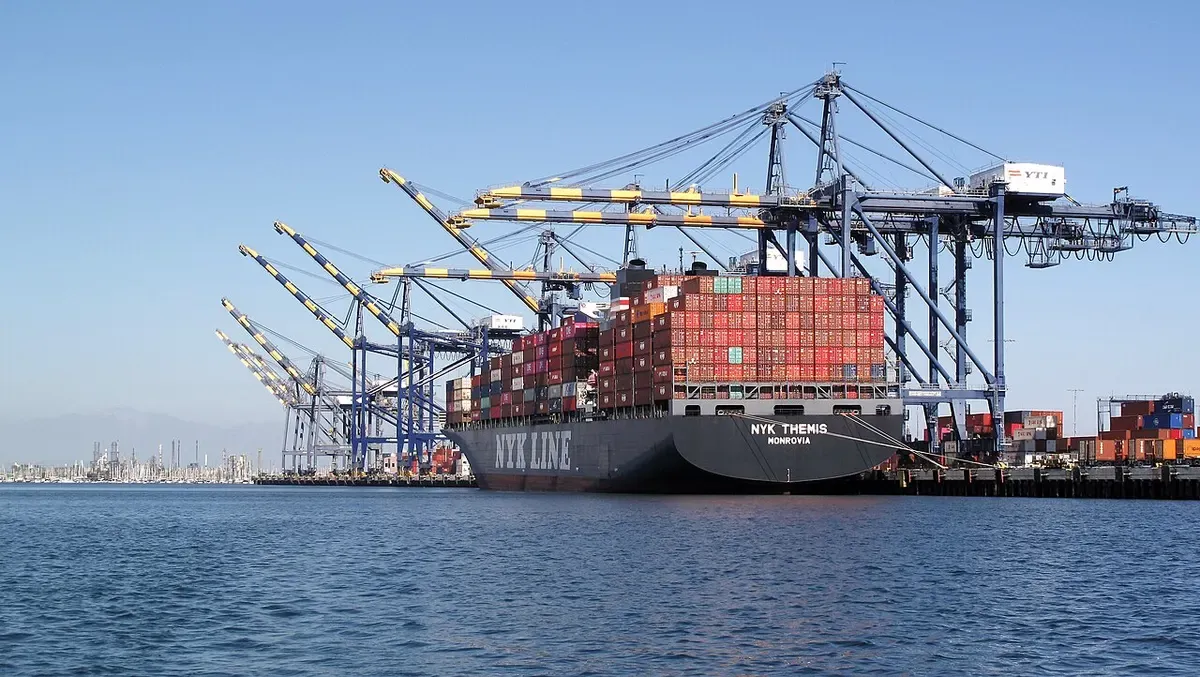
- Wikimedia Commons, Container ship NYK Themis at the Port of Los Angeles, Downtowngal, CC BY-SA 4.0

Duties, lists and customs procedures change. Confirm the rate, classification and entry requirements with a customs broker before you commit to a price.
Frequently asked questions
Is offshore stainless machining cheaper than onshore?
The shop price may be lower, but the part price is not the cost. Freight, duty, longer transit stock, inspection of the first lots and the cost of a late or rejected shipment all belong in a landed cost. We found no public source for a price gap, so compare quotes on the same drawing and the same delivery term.
What duty applies to imported machined stainless parts?
It depends on the destination and the classification. In the United States, Section 232 duty applies to the full customs value of listed steel articles, which includes the machining. Rates and lists have changed more than once in 2026, so ask a customs broker to confirm the code and rate before you commit.
What documents should an offshore shop send with stainless parts?
A commercial invoice, packing list, certificate of conformance, material certificate with heat number, inspection report and finish records, plus the information the importer needs for entry such as the classification and the country of melt and pour of the steel. Specify the set on the order.
Do onshore shops avoid origin and tariff questions?
Not entirely. An onshore shop that buys imported bar still brings in steel of foreign melt origin, and the US customs entry for steel articles asks for the country of melt and pour. Ask any shop where its bar was melted, whatever its own location.
Need a quote for this part?
Send the drawing. We read it, send one itemised quote within 24 business hours and place the work with a partner shop that cuts stainless.
Get a quote for your stainless partsFigures in this guide are published specification limits or published typical values for the alloy, not measurements of any part. Machinability is rated against free-machining carbon steel B1112 at 100 and PREN is chromium plus 3.3 times molybdenum plus 16 times nitrogen. The conventions are set out in thereference section and the editorial standards.