Expediting a late stainless order without breaking validation
November 21, 2026
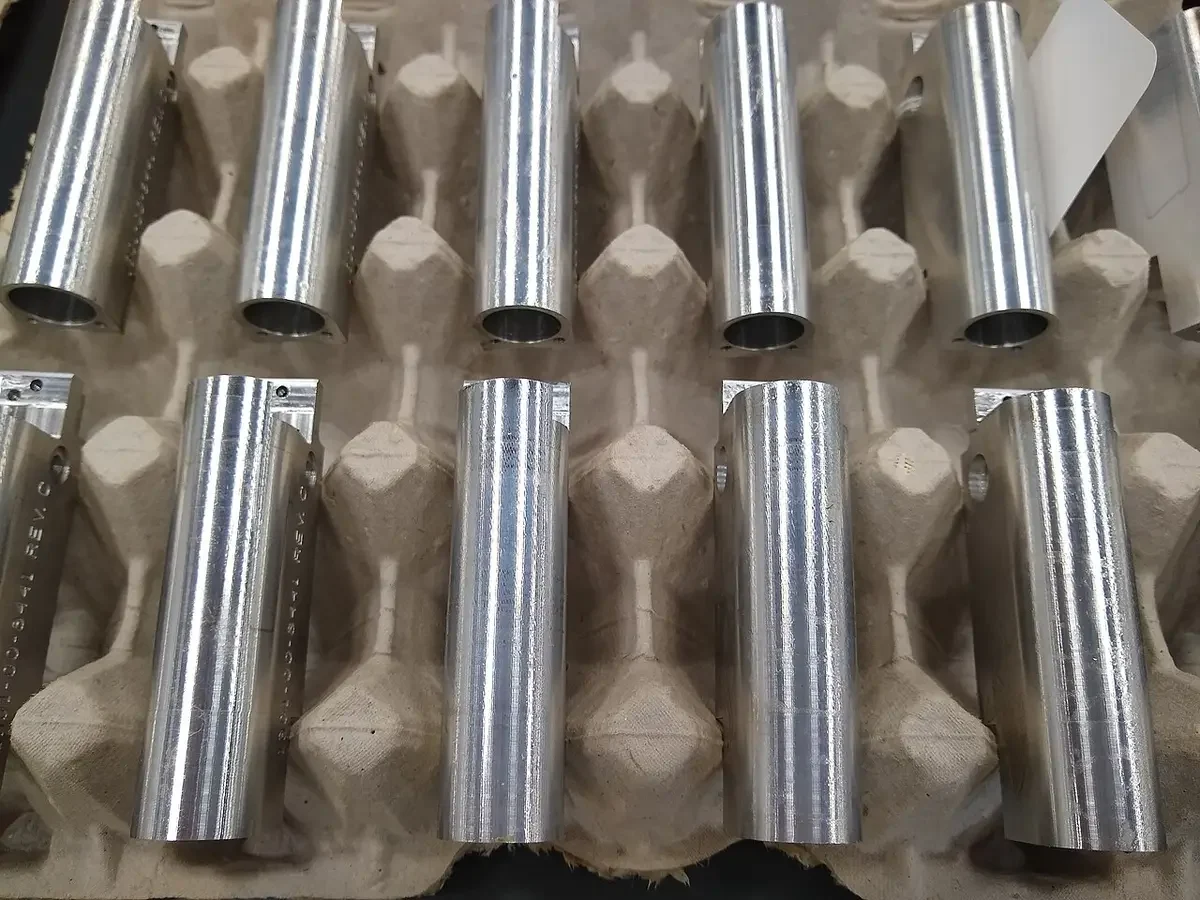
A late stainless order has four safe fixes and a short list of dangerous ones. The safe fixes make the same validated process run sooner: overtime on the approved machine, a queue slot at the same finisher, a split shipment of complete lots and a faster freight leg. The dangerous fixes change who or what makes the part: another machine, another passivation house, another bar mill or a cut to the inspection plan. For a medical or food buyer those need your written approval before they happen. This guide sorts the options and ends with an email you can copy.
It is written for the buyer who owns the delivery date and also owns the part approval. The two sit in one head for a few days, and a rushed shop will often suggest a fix without saying which side of the line it falls on.
First, find where the order actually is
Before you ask for a faster date, find the step that holds the order. A different step needs a different remedy, and asking for “more speed” on the wrong one only costs money. Ask the shop for a status by step, with a date for each.
| Step | The question to ask | What a late answer usually means |
|---|---|---|
| Bar | Is the certified bar on the shelf, with its heat number recorded against the order? | The clock has not started; the problem is purchasing |
| Machining queue | Which machine, and how many jobs are ahead of mine? | A capacity issue the shop can fix with a priority call or overtime |
| Deburr and clean | Is this done in house, and who is on it? | Often a hidden queue before finishing |
| Passivation or other finish | Is the slot booked with the finisher, and on which day? | An outside queue the shop cannot shorten alone |
| Inspection | Is the first article approved, and is the final inspection scheduled? | A gauge or CMM time problem |
| Documents | Is the certificate pack built from the traveler as the parts move? | Paper that waits until the end |
| Packing and freight | Is the packaging specified, and is a carrier booked? | Cleanroom or clean pack steps that add a day |
The lead time guide shows which of these steps have published figures and which do not. Use it to judge whether a date the shop gives you is realistic.
Options that change nothing validated
These keep the same machine, the same program, the same finisher and the same checks. The part you receive is the part you approved.
- Overtime or a second shift on the approved machine. The process is unchanged. Confirm the same operator training applies if a night crew runs the job.
- Queue priority. Moving your job up the list is a scheduling choice, not a process change.
- An express slot at the same finisher, if that finisher offers one. The method, bath and test stay the same.
- Faster freight. Air instead of sea changes the transport, which only matters if packaging or cleanliness rules depend on the route.
- Inspection and CMM time booked early. Reserving the final inspection slot when machining starts, rather than when it ends, saves days and changes no result.
Options that need your approval first
Each of these changes a thing you may have validated or qualified. Treat them as a change request, not as a favour.
| Option | Typical effect | Validation risk | Approval needed |
|---|---|---|---|
| Overtime on the approved machine | Gains time when the machine is the bottleneck | None | No |
| Queue priority | Gains time at the shop; no effect on outside steps | None | No |
| Express slot at the same finisher | Cuts the outside queue | None if method and test are unchanged | No |
| Split shipment of complete lots | First parts arrive earlier | Low if each lot carries its full record | Yes, agree in writing |
| Partial inspection report | Releases a lot sooner | Depends on the sampling plan you set | Yes |
| Run on a different machine | Gains time if the approved machine is busy | The first article and program were proven on another machine | Yes |
| Different passivation vendor | Gains time if the old vendor is full | A new bath, new records and a new certificate | Yes |
| Change from nitric to citric or the reverse | May shorten processing | A different method under the same standard | Yes |
| Different bar mill or heat | Gains time when the approved bar is late | New certificate, new chemistry within the grade | Yes |
| Skip or shorten inspection or cleaning | Gains hours | The record that proves conformity is missing | Yes, and expect a no |
| Move work to another site or subcontractor | Gains capacity | A new site is a change to the supply chain | Yes |
The reason is the way medical quality systems treat processes whose results cannot be fully checked on the part. ISO 13485:2016 clause 7.5.6 asks the device maker to validate such processes, and passivation and cleaning are classic cases. The FDA’s MDSAP audit approach tells auditors to check, when a validated process changes, that the change was reviewed and re-validated where appropriate. It also lists the maker’s review of a supplier’s validation data as one control a maker can use. The FDA’s Quality Management System Regulation took effect on 2 February 2026 and incorporates ISO 13485:2016, so US device makers now work under it.
For food buyers the rule is usually your own approved supplier procedure rather than ISO 13485. The question is the same: was the approval based on a particular machine, finisher or bar source? Ask your quality person before you say yes.
ASTM A967 is a good example of why method matters. It covers three passivation methods, nitric acid immersion, citric acid immersion and electrochemical treatment, and it leaves the choice of grade, treatment and acceptance criteria to the purchaser. A change of method is a change of process. The citric against nitric guide explains the difference.
Need a quote for this part? Get a quote for your stainless parts
Split shipments and partial inspection reports
A split shipment is the most useful tool and the one most often done badly. Set these rules before the first box leaves.
- Each shipment is a complete lot. One heat number, one passivation certificate, one inspection report and one packing list per lot. Never ship a box of machined parts that still need finishing.
- Lot identity survives. The label on the box carries the lot number from the traveler. Do not mix heats in a box to fill it.
- Say what the sample plan is. If the plan is a sample from the whole order, the shop must agree whether the partial report covers the quantity shipped or a later sample covers the rest.
- Agree what happens to the remainder. Name the date for the second lot and what you will do if it slips again.
- Check on arrival. Receiving inspection applies to each shipment. ISO 13485 clause 7.4.3 covers verification of purchased product, and your plan should say so.
The documentation pack guide lists the records each lot should carry.
Paying for speed: what to agree in writing
There is no public standard for who pays to recover a late order. The quality agreement, or the purchase terms, set it. What you can do is write the scope clearly so that nobody discovers a difference later.
- What is being expedited. Name the step and the date: “machining complete by 12 November, finisher slot confirmed”.
- What stays unchanged. Say that machine, finisher, method and bar source stay as approved.
- Any cost, and who carries it. Name an amount or a ceiling and the party. A figure agreed before the work is worth more than a larger one argued afterwards.
- What you will accept in place of the full order. A split shipment, a partial report or neither.
- Who signs. A named person on each side, and a copy to your quality contact.
An email you can copy
Subject: Expedite request, PO [number], part [number] rev [letter]
Hello [name],
Our order [PO number] is due on [date] and we need parts by [date]. Please send a status by step with a date for each: bar received, machining, deburr and clean, passivation, final inspection, documents, packing.
We can accept these steps to recover time, with no change to the approved process: overtime on [machine], queue priority, an express slot at [finisher] if available, air freight and a split shipment of complete lots with their own certificates and inspection reports.
We cannot accept without written approval from us: a different machine, finisher, passivation method, bar source or site, or any reduction of inspection or cleaning.
Please confirm which of these you will use, the new dates and any cost with the party that carries it. Please do not start any step that is not on this list before you hear from us.
[Name, role]
Preventing the next one
A late order is usually a late finisher or a late bar, and both are visible at release. Three habits shorten the next one.
- Book the finisher’s slot when you place the order, not when the machining ends.
- Ask for a weekly status line by step on any order longer than a week, so a slip shows early. The lead time guide lists the lines worth asking for.
- Release in lots that match your need, not in one large order, so that the first lot can ship while the next one runs. The prototype against production guide shows where the break points sit.
Next step
When you send an RFQ, state the delivery date, whether a split shipment is acceptable and which steps are validated, so shops quote against the real constraints. We send one itemised quote within 24 business hours and place the work with partner shops that cut stainless. You deal with one contact, and we answer for the parts.
Sources
- FDA, Quality Management System Regulation (QMSR), effective 2 February 2026, incorporates ISO 13485:2016
- FDA, MDSAP Audit Approach, MDSAP AU P0002.009, tasks on process validation, purchasing information and verification of purchased product
- ASTM, A967/A967M passivation specification (store page), scope
- ASTM, A380/A380M cleaning, descaling and passivating (store page), scope
- Wikimedia Commons, Lampin Machined Components, image source

Rules differ by customer and market. Confirm the requirements in your quality agreement and with your own quality lead before you change an approved process.
Frequently asked questions
Can I ask my shop to run my stainless order on a faster machine?
Only if the machine, program and first article that passed were not tied to the approval. For a validated or customer approved part, moving the job to another machine is a change to the process. Ask the shop to name the machine on the traveler and check your quality agreement before you agree. Overtime on the approved machine changes nothing.
Is a split shipment allowed on a validated stainless part?
Usually yes, if each shipment is a complete lot with its own heat number, passivation certificate and inspection report, and you agree it in writing. A box with mixed heats or parts that skip the finishing step is not a split shipment. It is a nonconforming shipment that you will have to quarantine.
Who pays when I ask for a rush on a late order?
Agree it before the work moves, and write the scope on the order. If the delay is the shop's, many buyers expect the shop to carry the cost of recovery. If you changed the drawing or the quantity, expect a charge. There is no public rule, so the quality agreement or the purchase terms decide.
Why can't a shop just change passivation vendor to save time?
Passivation and cleaning are results you cannot check completely on every part, so buyers validate the process. A new vendor, acid or tank is a different process and may need new evidence. The saving of a few days is small against a rejected lot.
Need a quote for this part?
Send the drawing. We read it, send one itemised quote within 24 business hours and place the work with a partner shop that cuts stainless.
Get a quote for your stainless partsFigures in this guide are published specification limits or published typical values for the alloy, not measurements of any part. Machinability is rated against free-machining carbon steel B1112 at 100 and PREN is chromium plus 3.3 times molybdenum plus 16 times nitrogen. The conventions are set out in thereference section and the editorial standards.