Rouging in stainless steel: what causes it in pharmaceutical systems and what a machined part buyer can control
November 9, 2026
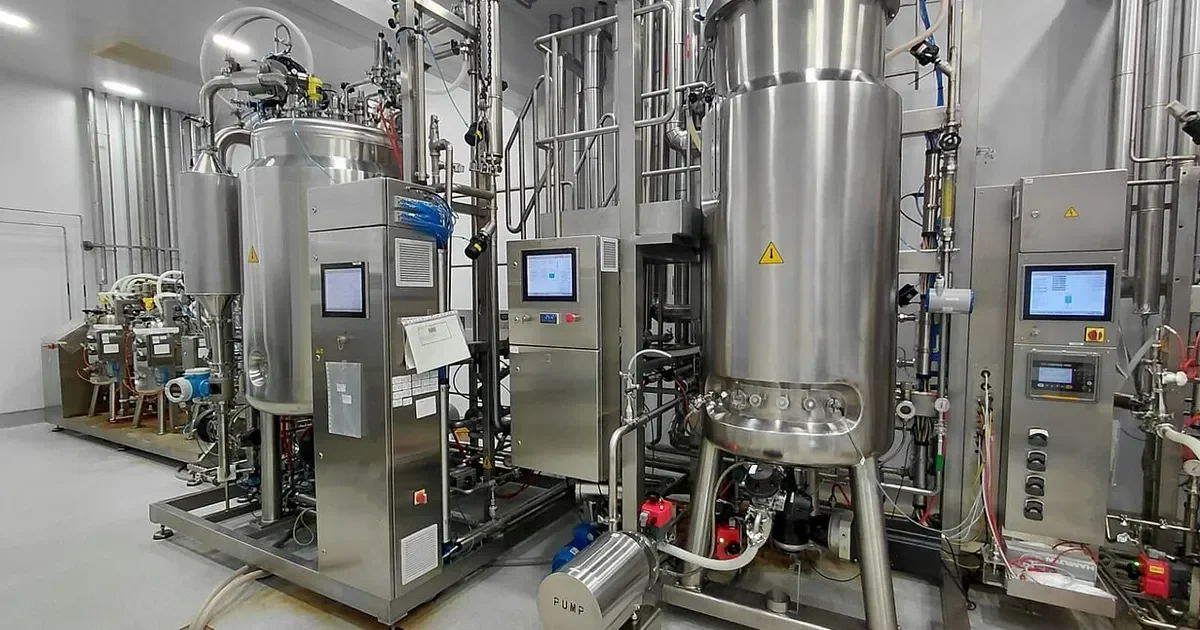
Rouging is a film of iron oxide that forms on stainless steel in contact with hot high purity water or clean steam. It is mostly decided by how the system is run, above all its temperature, so a machined part cannot prevent it alone. What the part can do is stay out of the way: arrive with no embedded iron, a measured finish, a passivated surface and a record that proves it. This guide sets out the three classes, what drives rouge and which limits belong on the print or purchase order.
What rouge is and the three classes
An industry article in Pharmaceutical Technology describes rouge as a form of surface corrosion that can form on stainless steel exposed to high purity water at elevated temperatures. It appears as a glazed, immobile discoloration or as a powdery reddish deposit, and the residue is iron oxide. The same article notes that the root cause is a contentious issue among pharmaceutical engineers, and that rouge particles may be as small as 10 nm even though they normally clump into larger sizes.
Pharmaceutical literature sorts rouge into three classes. The definitions below follow the Wikipedia entry and a GMP training article, and a water treatment vendor adds the removal view.
| Class | What it is | Typical look | Where it appears |
|---|---|---|---|
| I | Wipeable deposit that does not alter the metal beneath. A coating vendor ties it to external iron from tools or fabrication debris | Reddish brown, rubs off | Water systems |
| II | Iron formed in place on unpassivated or poorly passivated surfaces. The Cr to Fe ratio of the surface changes | Adherent, needs chemical removal | Surfaces with a weak passive layer |
| III | Iron oxide or scale in hot steam systems, described as blue black magnetite | Dark, strongly adhered | Pure steam and very hot systems |
Two cautions. Class definitions differ slightly between sources, and the normative text sits in the ASME BPE standard, which we could not open for this guide. And rouge often does not change routine parameters such as conductivity, so a clean water report does not rule it out.
What drives it
The GMP training article puts the cause as a destabilisation of the passive layer and names temperature as the key factor: the hotter a system is run or thermally sanitised, the more pronounced rouging typically becomes. It explains this through water autoprotolysis, where heat shifts the balance toward H3O+ and OH- ions and the hydronium ion acts as the aggressive agent. It also lists flow and standstill behaviour, and notes that a nitrogen overlay in tanks can make rouging worse.
Some facts from the same source that matter to a buyer:
- Temperature is the largest lever. Thermal sanitisation was historically set at 80 °C. The article says temperatures above 65 °C are frequently cited as sufficient. Any reduction has to be validated, because colder water risks biofilm.
- Passivation and electropolishing help but do not end the problem. They reduce the risk or delay the onset. Derouging removes deposits, but rouging typically returns after a period.
- The concern is particles. Deposits can circulate and reach the product, and metal ions can matter to particle sensitive steps.
A machine shop controls none of the first point. That is why the useful question is not “will this part rouge” but “what did we leave on the surface that the system can build on”.
What a machined part can and cannot control
Four surface conditions sit with the part, and each has a source behind it.
Free iron. Wikipedia gives welding of non-stainless support steel to a stainless surface as a classic cause, since the weld leaves a low chromium area when removed. A coating vendor lists tools and fabrication debris as the source of Class I rouge. In a machine shop this means dedicated stainless tooling and brushes, no cross use with carbon steel and no steel wool or abrasive wheels shared between materials. The ferroxyl and copper sulfate methods in the passivation test guide are the usual way to look for it.
Finish. Smoother surfaces hold less contamination, and the Pharmaceutical Technology article says roughness is measured at installation so a rouged area can be compared with a clean one. The ASME BPE finish designations, as listed by an electropolishing house, run from SF1 at 20 µin (0.51 µm) Ra maximum mechanically polished to SF4 at 15 µin (0.38 µm) mechanically polished plus electropolished. The same page stresses that these are maximums, not averages, so every reading must meet the limit, and that an electropolished surface does not automatically meet SF4. The Ra guide explains how a shop should report it.
Passivation after machining. Chemical passivation with nitric or citric acid restores the chromium oxide layer after fabrication, as a coating vendor describes it. The citric against nitric guide compares the two and the passivation against electropolishing guide covers when the second is worth its cost. Note the GMP article’s own caution: neither one is a cure.
Heat tint on welded parts. An ISPE paper on weld discoloration reports that the BPE colour charts replaced the older AWS D18.2 reference in 2012 and that passivation may not fully remove colour from the heat affected zone but improves corrosion resistance. Electrochemical cleaning and electropolishing can remove the colour. If the part has welds, name the acceptance chart, not just “no discoloration”. The weldment guide covers the machining order.
Grade matters at the margin. A coating vendor says molybdenum bearing 316L resists rouging better than 304, which matches the usual choice of 316L for pharmaceutical contact parts, but it is a vendor statement and no substitute for the customer’s specification. See the pharmaceutical parts guide for the document pack.
Need a quote for this part? Get a quote for your stainless parts
What to put on the print or order
| Item | Write this | Why |
|---|---|---|
| Grade | 316L with UNS number and bar specification | Traceable, same grade across fittings and tube |
| Finish | SF designation and numeric Ra maximum, instrument and number of readings | Every reading must pass, not the average |
| Iron control | Stainless only tooling and abrasives, no carbon steel contact | Free iron is the Class I starting point |
| Passivation | Method, standard and acceptance test, lot certificate | Evidence for root cause review |
| Weld colour | BPE chart level accepted in the heat affected zone | A written limit settles disputes |
| Cleaning and packing | Cleaned, bagged or capped, lot labelled | Recontamination in transit shows up later |
| Records | Heat number, roughness report, passivation certificate kept with the lot | Lets the plant include or exclude the part |
When rouge appears in service, the plant follows its own procedure. The Pharmaceutical Technology article describes deciding whether the deposit is additive or cleanable, documenting it, and comparing the roughness of the rouged area with a clean area of the same tank. A part supplier helps most by having the records on file.
If you need quotes for hygienic stainless parts with these limits, send the drawing through the RFQ form and list the finish, passivation and document requirements. We send one itemised quote within 24 business hours and place the work with partner shops that cut stainless. Shops state their own certificates. The medical and pharmaceutical industry page collects the related guides.
Sources
- Pharmaceutical Technology, Classifying rouge helps define remediation procedures
- GMP Compliance Academy, Rouging in pharmaceutical water and pure steam systems: causes, effects and control measures
- Wikipedia, Rouging
- ISPE Pharmaceutical Engineering, Acceptable discoloration levels in pharmaceutical welds (July to August 2024)
- Harrison Electropolishing, ASME BPE surface finish specifications, finisher page, directional
- Armoloy, Metal rouging in stainless steel, coating vendor page, directional
- Veolia Water Technologies blog, Rouging, an invisible enemy, derouging vendor page, directional
- Wikimedia Commons, USP DSP Plant, image source

Temperatures and class definitions are as published in the sources above. Confirm the governing edition of ASME BPE and the plant’s own rouge procedure before setting acceptance limits.
Frequently asked questions
What is rouging on stainless steel?
Rouging is a reddish to dark iron oxide film that forms on stainless steel in contact with hot high purity water or clean steam. It can appear as a powdery deposit or a glazed, stuck-on discoloration. It is linked to a destabilised passive layer, and it rarely changes routine water readings such as conductivity.
Can passivation or electropolishing prevent rouging?
No. A GMP training source states that passivation and electropolishing can reduce the risk or delay the onset, but they are no substitute for risk based monitoring and a sound sanitisation concept. Rouging cannot generally be prevented completely in hot pharmaceutical water and pure steam systems. Temperature is described as the biggest lever.
Is 316L immune to rouging?
No. A coating vendor page says molybdenum grades such as 316L resist rouging better than 304 but not well enough for the most aggressive environments. Treat that as directional. The grade helps, while surface condition, free iron and operating temperature decide the outcome. Name the grade on the print and keep the heat number.
Does rouge mean the machined part was bad?
Not by itself. Class I rouge is described as migrating from elsewhere in the system, so a deposit on one part may come from a pump, a fitting or a carbon steel contact upstream. Keep the part's roughness report, passivation certificate and heat number, so a root cause review can include or exclude it.
Need a quote for this part?
Send the drawing. We read it, send one itemised quote within 24 business hours and place the work with a partner shop that cuts stainless.
Get a quote for your stainless partsFigures in this guide are published specification limits or published typical values for the alloy, not measurements of any part. Machinability is rated against free-machining carbon steel B1112 at 100 and PREN is chromium plus 3.3 times molybdenum plus 16 times nitrogen. The conventions are set out in thereference section and the editorial standards.