316L for hydrogen service: why nickel content, cold work and heat history matter more than the grade name
November 6, 2026
316L is the stainless steel that hydrogen systems are built around, and a nickel range of 10 to 14 percent is allowed inside the grade. Sandia’s hydrogen compatibility reference finds resistance improving with nickel within that range, and reports losses in low nickel heats, in sensitized material, at temperatures near 200 K and in welds that contain ferrite. So the print for a hydrogen part needs more than “316L”: it needs a nickel floor, a condition, a ban on heat that sensitizes and a clear owner for the design decision.
This guide summarises what the public Sandia data say for a buyer who orders machined parts. It does not replace the design code or an engineer’s material selection. The Sandia reference itself carries a notice that the reader must determine whether the information is suitable for the intended application.
Why 316L is the benchmark
The Sandia entry for 316 and 316L describes metastable austenitic alloys whose high nickel and molybdenum content give a high stacking fault energy. That feature promotes cross slip and is generally associated with superior hydrogen compatibility. It says 316 appears more resistant to hydrogen assisted fracture than most other austenitic stainless steels, and that the resistance seems to improve with nickel concentration within the standard limits.
A 2016 Sandia presentation for the US Department of Energy uses annealed 316L, with about 12 percent nickel, as the benchmark that lower cost alloys are measured against. Nickel is the cost lever, so the same page that makes nickel useful makes it expensive. A 6 percent nickel alloy is being tested as a cheaper substitute, and the presentation calls its data sparse.
Where 316L loses margin
Sandia’s data show the grade is not immune. These are the cases that bear on a purchase.
| Condition | Sandia finding | What it means for the order |
|---|---|---|
| Low nickel heat | A heat at 10.05 percent nickel lost about 10 percent of ductility in 1 MPa hydrogen at room temperature, with strain-induced martensite | Specify a nickel minimum, not just the grade range |
| High nickel, low carbon heat | Disk rupture tests found no susceptibility, annealed or 60 percent cold worked | Chemistry can be better than the grade minimum |
| Sensitized | Larger susceptibility after 973 K for 24 hours than solution annealed | Forbid heat in the sensitizing range after annealing |
| Near 200 K | Greatest ductility loss near 200 K, and about 30 percent lower disk rupture pressure for 316L near 220 K | Service temperature belongs on the drawing |
| Welds with ferrite | Welded disks with 8.5 percent ferrite ruptured at 15 to 20 percent lower pressure than in helium | Weld procedure and ferrite level are design inputs |
| Additive build | Laser deposited 316 lost more ductility after hydrogen precharging than wrought 316 | Do not assume wrought data transfer |
On welds, the same entry reports that electron beam and gas tungsten arc welds were unaffected in tension in high pressure hydrogen, so a weld is a case to qualify, not a case to forbid. For fatigue, the 2016 presentation found that gaseous hydrogen measurably reduced the fatigue performance of strain hardened 316L, while hydrogen precharging did not. Annealed and strain hardened material behave differently, and the design must say which it uses.
What about cold work and machining
Cold work is a double edge. Sandia reports the high nickel low carbon heat was not susceptible even at 60 percent cold work, yet its 304 entry says strain-induced martensite, which forms during room temperature deformation including machining, is associated with lower resistance. The 304 entry says cold work should be avoided for hydrogen service in favour of warm work, and that martensite from cold deformation and machining raises susceptibility in disk rupture tests.
The 316 entry has no machining data. A machine shop therefore cannot decide from the published reference whether a cut surface of 316L needs a final anneal or surface removal for a given pressure. That is a design authority call. If you are unsure, ask the system designer before you order, and read the work hardening guide for how a cut surface hardens in stainless, and the guide on magnetism in 316L for why a machined 316L part can pick up a magnet.
Need a quote for this part? Get a quote for your stainless parts
What to put on the print and RFQ
- Grade and UNS number, for example 316L, UNS S31603, with the spec such as ASTM A276 and the A276 against A479 guide if the bar form is unclear.
- A nickel minimum agreed with the system designer. A valve and fitting maker recommends at least 12 percent nickel for hydrogen and warns that not all 316 is the same. Treat that as a supplier guideline, and ask for the nickel value on the mill test certificate.
- Condition: solution annealed, with no later heat in the sensitizing range of roughly 773 to 1073 K as Sandia describes it.
- Service temperature range, especially if cryogenic or near 200 K.
- Weld and ferrite requirements, and that any weld filler is part of the qualified procedure.
- Cold work and machining allowance: say whether the design authority requires a final anneal or surface removal. Do not leave it to the shop.
- Documents: heat number traceability and the certificate with chemistry, since the nickel figure decides the choice.
Hydrogen parts are often manifolds and fittings with drilled passages. The manifold machining guide covers cleanliness and drilling, and the 316 against 316L against 316Ti guide covers the grade choice.
To get quotes for 316L parts with a nickel floor and a named condition, send the drawing through the RFQ form and list the hydrogen service in the notes. We send one itemised quote within 24 business hours and place the work with partner shops that cut stainless. We own no machines, and we do not select materials for pressure systems.
Sources
- Sandia, Technical Reference on Hydrogen Compatibility of Materials: Type 316 and 316L (code 2103, 2005)
- Sandia, Technical Reference on Hydrogen Compatibility of Materials: Type 304 and 304L (code 2101, 2005)
- San Marchi and Zimmerman, Innovative Development, Selection and Testing to Reduce Cost and Weight of Materials for BOP Components, US DOE Hydrogen Program review (2016)
- Swagelok, how to select materials for hydrogen applications, fitting maker white paper, directional
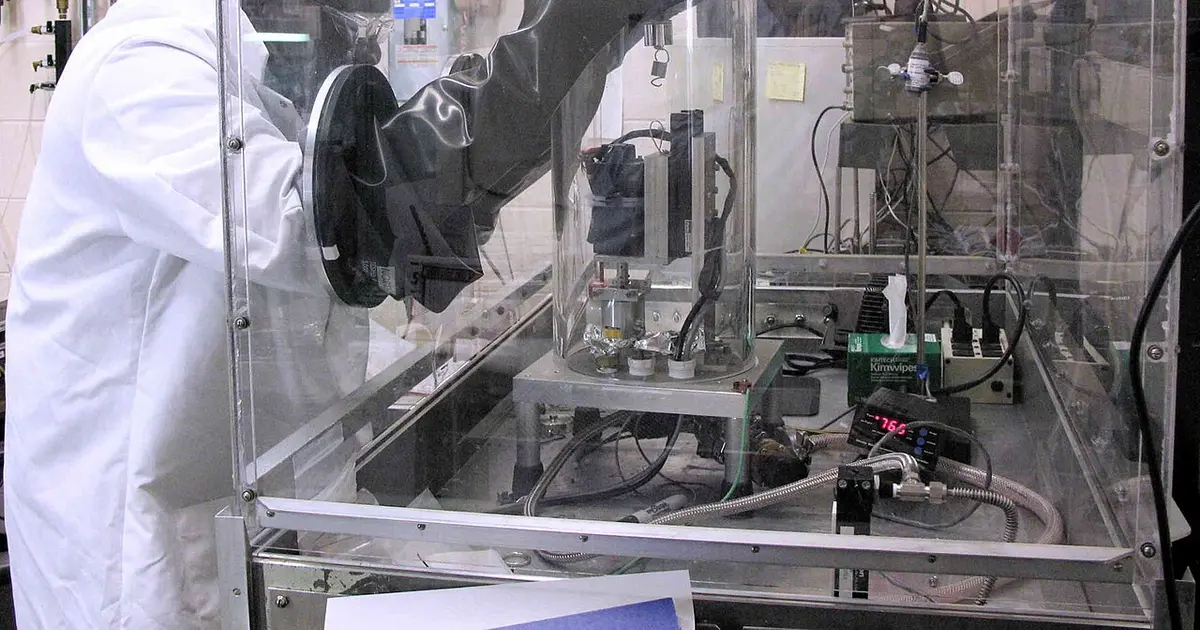
- Wikimedia Commons, Argonne’s Tribology Lab Hydrogen Tribometer, image source

The Sandia entries date from 2005 and are updated periodically by the authors. Confirm current data and the governing hydrogen code with the system designer.
Frequently asked questions
Is 316L stainless steel safe for hydrogen service?
316L is the reference austenitic stainless for gaseous hydrogen, and Sandia data show it resists hydrogen assisted fracture better than most other austenitic grades. The data also show exceptions: low nickel heats, sensitized material, welds with ferrite and low temperatures near 200 K showed losses. The design code and the system designer decide, not the grade name.
How much nickel should 316L have for hydrogen?
The UNS S31603 range is 10.00 to 14.00 percent nickel. Sandia reports resistance improving with nickel inside that range. One valve and fitting maker recommends 316 with at least 12 percent nickel for hydrogen. That is a supplier guideline, so confirm the minimum with the system designer and put it on the print.
Is 304 worse than 316L in hydrogen?
Sandia describes 304 as having lower stacking fault energy and a tendency to form strain-induced martensite during room temperature deformation, including machining. Both factors are linked to higher susceptibility. It recommends avoiding cold work on 304 for hydrogen service. 316L is the usual choice because it is less prone to martensite.
Does machining affect hydrogen embrittlement in stainless parts?
For 304, Sandia says martensite from cold deformation and machining raises susceptibility. The 316 entry gives no machining data. If a pressure bearing 316L part goes into hydrogen, the design authority should say whether a final solution anneal or surface removal is required, rather than the shop assuming it.
Need a quote for this part?
Send the drawing. We read it, send one itemised quote within 24 business hours and place the work with a partner shop that cuts stainless.
Get a quote for your stainless partsFigures in this guide are published specification limits or published typical values for the alloy, not measurements of any part. Machinability is rated against free-machining carbon steel B1112 at 100 and PREN is chromium plus 3.3 times molybdenum plus 16 times nitrogen. The conventions are set out in thereference section and the editorial standards.