Stainless steel parts for cryogenic service: 304L against 316L, what impact tests do and do not prove and what to put on the order
November 8, 2026
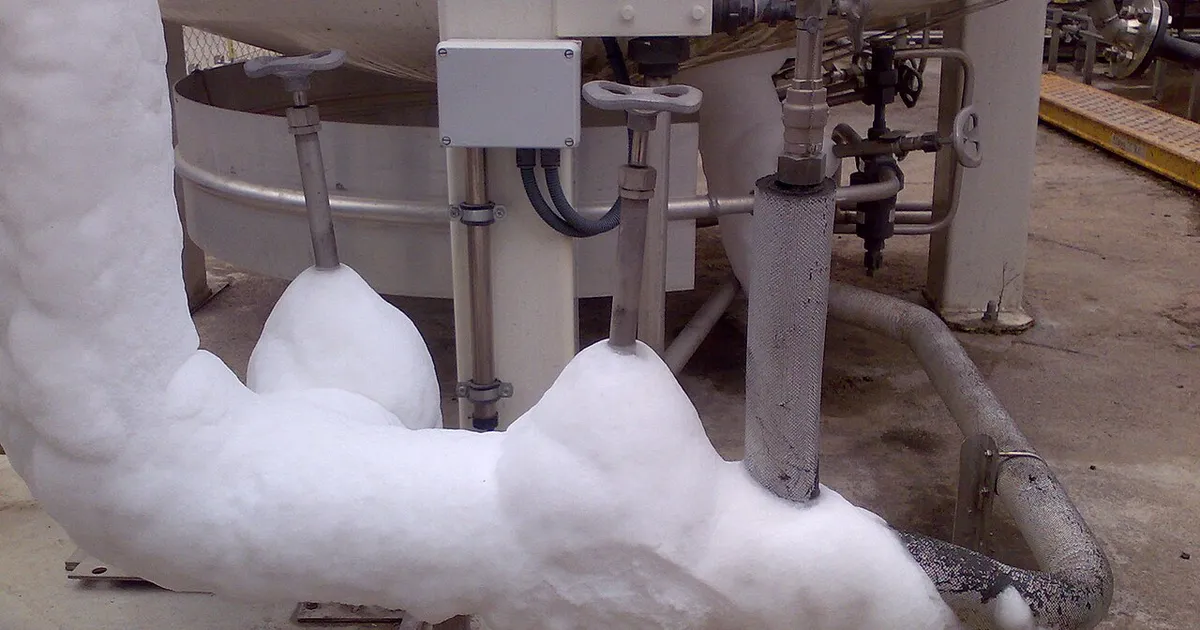
For most cryogenic stainless parts the grade question has a short answer: 304L or 316L, solution annealed, because austenitic stainless does not go brittle in the cold the way carbon steel and 400 series do. The questions that decide the order sit around the grade: whether the design code demands impact tests, how welds are qualified, whether cold work can make a part magnetic and how far everything shrinks. This guide covers those points as the open sources state them and lists what to put on the print.
Why austenitic grades are the default
A Valve Magazine article describes austenitic steels as generally recognised for their lack of a ductile to brittle transition. Solution annealed wrought 304 and 316 lose essentially no toughness even at cryogenic temperatures: notched Charpy specimens stop the hammer on smaller machines, and on larger machines they bend and are thrown from the tester without cracking. Ferritic and martensitic materials, which include carbon steels and the 400 series stainless grades, lose toughness in the cold. That makes 400 series parts a poor starting point for cold service, and cast CF grades, which carry some ferrite by design, behave differently from wrought bar. The hardenable grades guide explains the 400 series.
304L against 316L
Both grades are used. The evidence for choosing between them is thinner than the field habit suggests.
| Point | 304L | 316L |
|---|---|---|
| Code position, pipe specification note | TP304, TP304L and TP347 accepted by ASME Section VIII Division 1 as low as -425 °F (-250 °C) without impact tests | Other AISI grades usually accepted as low as -325 °F (-200 °C) |
| Field record cited in an ASME and NASA project | All 77 systems in an industry letter, run at -425 or -452 °F without toughness testing, were 304 or 304L | Weld toughness data collected for 316L, see below |
| Martensite on straining at 77 K and 4 K | Forms faster and to a greater extent in a published comparison | Less, but that study used 316LN, a nitrogen alloyed grade, not plain 316L |
| Fracture toughness in the same study | Lower than 316LN | Higher, for 316LN |
| External corrosion resistance | No molybdenum in the grade | Molybdenum adds pitting resistance, see the PREN tool |
Read the table as a prompt to ask, not a ranking. If the design calls for a grade, use it. If the print leaves the choice open, ask the design authority, since nothing in the open sources sets one grade above the other for every cryogenic part. The 304 against 304L guide and the 316 against 316L guide cover the carbon and molybdenum points.
What impact tests do and do not prove
North American codes generally do not require impact tests for common austenitic grades down to about -325 °F. The Valve Magazine article says minimum allowable temperatures in ASME B31.3 Table A-1 for the usual austenitic materials run from -425 °F (-254 °C) to -325 °F (-198 °C) depending on grade and form, with no impact test, though impact qualified weld filler is required in certain welded cases. It also notes that the EU Pressure Equipment Directive asks for 27 J at 20 °C or the minimum design temperature, whichever is lower, unless toughness is clearly assured without testing.
The ASTM A312 pipe specification note adds two triggers. Impact testing may be required for material with chromium or nickel outside the AISI ranges, and for carbon above 0.10 percent when service falls below -50 °F (-45 °C). The criterion the note uses is 15 ft-lbf (20 J) of absorbed energy or 15 mils (0.38 mm) of lateral expansion. That is a pipe specification. Machined parts come from bar, so the requirement reaches them through the design code or the order, not through the grade name.
Impact tests also have limits. A NIST report on Charpy tests at 77 K on four 316L welded plates, each made by a different vendor to the same specification, found average absorbed energies of 43.0, 83.3, 60.5 and 92.3 J, with the toughest plate showing more than twice the absorbed energy of the least tough. The report links the weakest plate to wormhole porosity and a smaller plastic zone in the weld metal. The same report says Charpy testing below 77 K is not technically feasible because of temperature rise during specimen transfer and adiabatic heating, so a 77 K test is used to judge performance at 4 K, and the technical basis for that is questioned.
A 2024 presentation from ASME, NASA and NIST project work, by authors from Jacobs, Swagelok and Southwest Research Institute, argues that 316L weld metal is tough enough at -452 °F for ASME B31.3 piping without individual weld tests if conditions are met: qualified welders, arc welding processes named in the deck (GTAW, SMAW, FCAW and SAW), 100 percent ultrasonic inspection, leak testing, stress not above 16.7 ksi and pipe not above 10 inch. It also summarises the Section VIII Division 1 route in UHA-51(a)(3): testing at -320 °F is enough for operation at lower temperatures if the ferrite number is within limits (10 or less for 316L weld metal), impact specimens are taken from base metal, heat affected zone and weld metal, and lateral expansion is at least 0.021 in (0.53 mm). That is a set of recommendations as of September 2024, not an adopted rule, so a buyer should follow the code edition on the drawing.
Need a quote for this part? Get a quote for your stainless parts
Welds, martensite and cold work
Welded parts carry the real cryogenic risk, as the NIST spread shows. The weldment guide covers machining order. If a machined part is later welded into a system, ask which weld procedure and filler the designer has qualified.
Austenitic stainless can transform to martensite when it is strained, and martensite is magnetic. A published comparison of 304L and 316LN at 77 K and 4 K found that the transformation occurred faster and to a greater extent in 304L, measured by magnetic induction, electron backscatter diffraction and optical microscopy, which agreed with each other. Machining and heavy forming add strain. The work hardening guide and the 316L magnetism guide explain how a part picks up magnetism. We found no general permeability limit for acceptance, so if the application is sensitive to magnetism, ask the designer for the limit and the measuring method and put both on the order.
Shrinkage and fits
A NIST curve fit for 304L gives a linear contraction of about 0.28 percent from 293 K to 77 K, which is 0.28 mm per 100 mm. We calculated that from the coefficients on the NIST page, which cover 4 to 300 K with a stated fit error of about 5 percent. Over a 500 mm body that is about 1.4 mm. Press fits, thread engagement, seals and joints to other metals all see it, and different materials shrink by different amounts. Designing and dimensioning for the cold state is the designer’s job, and the shop should be given the dimensions to machine at room temperature.
What to put on the order
- Grade and condition: 304L or 316L as a UNS number, with the bar specification and the solution annealed condition. See the A276 against A479 guide.
- Impact requirement, if any: the code or customer specification, the test temperature, the criterion (energy or lateral expansion), the specimen orientation and who pays for tests.
- Magnetic limit, if the application is sensitive, with the measuring method.
- Chemistry limits beyond the grade, such as carbon, and the heat number on the mill certificate.
- Cleaning: name the cleanliness specification if the service is oxygen or ultra clean, since we cannot say which one applies.
- Cold work limits on cuts and formed features, where the designer needs them.
- Documents: certificate, traceability and the impact test report if required.
To get quotes for stainless parts with a named condition and test requirement, send the drawing through the RFQ form and list the cryogenic service in the notes. We send one itemised quote within 24 business hours and place the work with partner shops that cut stainless. We own no machines, and we do not select materials for cryogenic systems. The reference grade table lists the typical values for each grade.
Sources
- Valve Magazine, Austenitic stainless steels (2008)
- ASTM A312/A312M, scope and note on low temperature service
- NIST Technical Note 2196, Instrumented Charpy tests at 77 K on 316L stainless steel welded plates
- NASA, Ultra-low temperature testing requirements for 316L stainless steel in ASME B31.3, September 2024
- EngrXiv preprint, strain induced martensite and fracture toughness of AISI 304L and 316LN at 77 K and 4 K
- NIST Cryogenic Materials Data, 304L stainless steel
- Wikimedia Commons, Cryogenic valves, The Alloy Valve Stockist, image source

Code positions are as reported by the sources above and change between editions. Confirm the requirement with the design authority and the code edition named on the drawing.
Frequently asked questions
Which stainless steel is used for cryogenic parts?
Austenitic grades, mainly 304L and 316L in the solution annealed condition. A valve industry article says wrought 304 and 316 show essentially no loss of toughness even at cryogenic temperatures, because austenitic steels lack a ductile to brittle transition. Ferritic and martensitic grades, including 400 series, are the ones that lose toughness in the cold.
Do 304L and 316L need Charpy impact tests at -196 °C?
Often not, but it depends on the design code and the customer. An ASTM pipe specification note says TP304, TP304L and TP347 are accepted by ASME Section VIII Division 1 as low as -425 °F without impact tests, and other AISI grades usually as low as -325 °F. Welds, high carbon and the purchaser can still require tests.
Why can cold or machined 304 become magnetic?
Austenitic 304 can transform to martensite when it is strained, and martensite is magnetic. A study of 304L and 316LN at 77 K and 4 K found the transformation faster and more extensive in 304L. Cold work from machining adds strain, so ask the designer whether a magnetic permeability check applies. We found no general acceptance limit.
How much does stainless steel shrink at liquid nitrogen temperature?
A NIST curve fit for 304L gives a contraction of about 0.28 percent from 293 K to 77 K, which is about 0.28 mm per 100 mm of length, from our calculation using the NIST coefficients. Fits, seals and joints with other materials must allow for it. Dissimilar metals shrink by different amounts.
Need a quote for this part?
Send the drawing. We read it, send one itemised quote within 24 business hours and place the work with a partner shop that cuts stainless.
Get a quote for your stainless partsFigures in this guide are published specification limits or published typical values for the alloy, not measurements of any part. Machinability is rated against free-machining carbon steel B1112 at 100 and PREN is chromium plus 3.3 times molybdenum plus 16 times nitrogen. The conventions are set out in thereference section and the editorial standards.