Buying stainless bar as a shop: how length, drops and certificates change what each part really costs
November 17, 2026
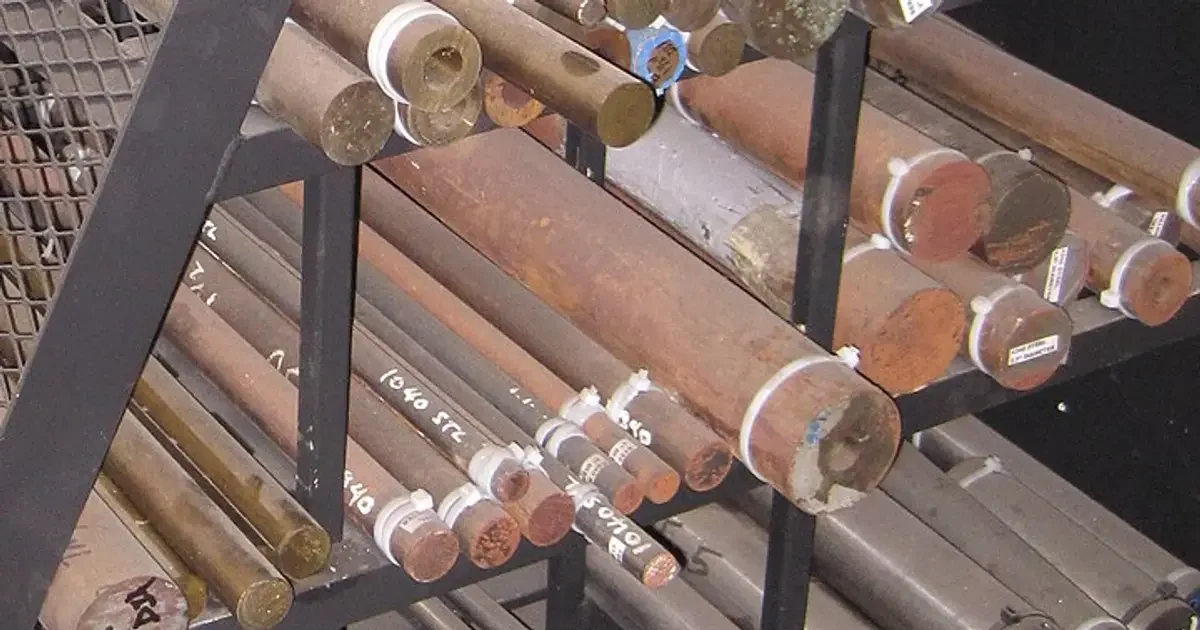
A shop that buys stainless bar on price per kilogram and diameter alone misses where the margin goes. The price of a finished part is set by three buying choices made before the saw starts: the length you buy, what you do with the drop, and whether the certificate matches the bar. This guide is for the buyer or owner at a machine shop who wants those choices to be deliberate. The buyer-side view of the same material choice is in the ASTM A276 against A479 guide.
Why bar buying is a margin item
On a turned part the bar is a direct cost, and the nickel and alloy surcharges that mills add move it from month to month. No public survey gives a typical share of part price, so work it out from your own quotes. The alloy surcharge guide shows how a surcharge reaches the price of a part. A shop cannot control the surcharge. It can control how much of each bar becomes a part and how much becomes a drop, and it can control the paperwork that decides whether the part can be sold to a food or medical buyer at all.
Before you ask for a price, settle five items and write all five on the purchase order: grade, specification and condition, diameter and finish, length and tolerance, and the certificate you need.
Size, finish and what the tolerance allows
Bar arrives in several finishes and each leaves a different amount of stock to remove. Hot finished bar is rough and needs more stock removed. Cold finished and ground bar costs more per piece but is rounder, straighter and closer to size. The condition list in the ASTM A484 general requirements, as summarised on a distributor reference page, covers hot-worked, hot-worked and annealed, hot-worked annealed and cold-worked, and hot-worked annealed and heat-treated, and austenitic grades are furnished solution annealed.
For cold finished round bar, one supplier data sheet reproduces the ASTM A484 diameter tolerances, equal plus and minus:
| Specified size (mm) | Tolerance (mm) |
|---|---|
| 1.50 to 7.99 | ±0.03 |
| 8.00 to 12.99 | ±0.04 |
| 13.00 to 24.99 | ±0.05 |
| 25.00 to 37.99 | ±0.06 |
| 38.00 to 100.00 | ±0.08 |
That sheet also lists ISO 683/13 classes h9 and h11 and notes that the supplier ships h9 up to 50.8 mm and peels larger sizes to h11. These are one supplier’s figures, so read the current standard and your own supplier’s sheet before putting a tolerance on a drawing. The practical point is that a bar at the top of its band leaves more stock to remove than one at the bottom. Measure a few pieces at receiving and record them.
Choose the diameter by the finished size plus the stock you need to clean up the surface and remove bow, not by the nearest standard size. A bar one step too large costs more to buy and more to cut away. A bar one step too small makes scrap. The bar against plate guide covers when another stock form wins.
Lengths and drops
Stainless bar is normally stocked in random lengths. A distributor says its 304 and 316 rounds come in 12-foot (144 inch) random lengths, which it calls the standard in the steel industry. Another distributor guide says stainless bar is often listed as 11 to 14 feet random and that a bar of 13 or 16 feet is possible, with shorter bars uncommon. The distributor picks the actual length from what is on its floor.
The same guide describes cut-to-length as costing more than random, and says to state the tolerance you accept. It notes that the historical default, if nothing is specified, was plus 1/8 inch and minus 0. It also advises saying whether mill ends should be trimmed, because sheared ends may taper or be undersize, and asking for square cut ends if the tolerance is close. For small diameters under 5/8 inch it says special instructions may be needed, and for large diameters over 10 inches it says extra stock is usually left on the cut, often 3/8 or 1/2 inch. Another distributor lists a cut length tolerance of plus or minus 1/8 inch, says custom cuts may need one to two days and says cut material cannot be returned.
What a drop costs: worked example
The arithmetic below is an illustration with assumed numbers, not a quote. Take a shaft blank. The finished part is 450 mm long, the facing allowance is 2 mm, the saw kerf is 3 mm and you lose 20 mm at each end of the bar, so each blank uses 455 mm of bar and each bar yields its length minus 40 mm.
| Random length | Bar length (mm) | Blanks per bar | Bar not turned into blanks (mm) | Share of the bar |
|---|---|---|---|---|
| 11 ft | 3,353 | 7 | 168 | 5.0% |
| 12 ft | 3,658 | 7 | 473 | 12.9% |
| 13 ft | 3,962 | 8 | 322 | 8.1% |
| 14 ft | 4,267 | 9 | 172 | 4.0% |
A 12-foot bar gives the same seven blanks as an 11-foot bar, so you pay for 305 mm of steel that makes nothing. A 14-foot bar gives nine. If your supplier ships a mix of lengths, the cost per blank differs by lot even at the same price per kilogram. For a 45 mm part the effect is small: it uses 50 mm of bar, so whatever the length, under 90 mm is left over, end losses included, and random length is fine.
Three rules follow.
- Divide bar price by blanks, not by weight. Compare cut-to-length and random on cost per finished part, with your own kerf and allowances.
- Ask for the length range at quote time. A price quoted on “random” is incomplete without the range you will actually receive.
- Think about the drop before you buy. A drop of 300 mm is a future shaft if you hold a use for it and scrap if you do not. Count the plan for drops as part of the price.
Need a quote for this part? Get a quote for your stainless parts
Certificates when you buy
A bar without a certificate that matches it cannot go into a food or medical lot. Check three things before the first cut: the heat number on the certificate matches the stamp or tag on the bar, the grade and specification on the certificate match the order, and the type of certificate is the one the customer asked for. The mill test certificate guide shows how to read one.
The type matters. A BSSA summary of EN 10204 describes type 2.2 as a statement based on the manufacturer’s non-specific inspection, which can rest on results from another coil of the same cast. Type 3.1 gives results from specific inspection of the batch and is signed by a manufacturer’s representative independent of the manufacturing department. Type 3.2 adds an independent inspector appointed by the customer or by official regulations. If the order says 3.1, a 2.2 does not satisfy it.
Ask these at purchase, because they are hard to ask after the bar is cut:
- Is the certificate the mill original, or one the distributor reissued? If reissued, does it show the mill name and the heat?
- Will a cut-to-length order of 40 bars come from one heat or several? If several, will each bar carry its own tag, and will the certificate list every heat?
- Does the bar carry its heat number on the bar itself, not only on the bundle?
Receiving checks
| Check | How | Why |
|---|---|---|
| Tag against certificate | Read the heat on the bar and the cert side by side | The whole pack depends on it |
| Grade | Positive material identification where the customer requires it, or a documented sample | Mixed bars happen, and a wrong grade found after machining costs the whole lot |
| Size | Micrometer at three places on a few bars | Tells you how much stock you really have |
| Straightness | Roll the bar on a flat surface and look | Bow needs extra stock or a rejected bar |
| Surface | Look for seams, laps, rust spots | A surface defect shows after the first cut |
| Storage | Keep stainless away from carbon steel and its dust | Iron dust embedded in the surface can rust and can fail a passivation test |
Write the heat number on the traveler before you cut. Cutting removes markings from the bar, and a drop with no tag has no certificate. The method in the document pack guide covers the paper trail. Tag every drop with grade, heat and diameter before it returns to the rack. A drop with an unknown heat has no certificate and cannot go into a lot that needs one.
What to write on the purchase order
Round bar, 316L, ASTM A276 condition A, cold finished, 30.00 mm diameter, random length 3.6 to 4.3 m, mill ends removed. EN 10204 type 3.1 certificate showing heat number, one heat per bar, heat stamped on each bar end. Tolerance on diameter per ASTM A484. Certificate to be supplied with the material.
Swap in your own grade, length range and customer rule. A short order like this does more to protect the margin than an hour on the phone about price.
If stainless work with certificates is regular business for you, apply as a partner shop. Our work requests show the grade, finish and certificates the buyer wrote, and we reply within 24 business hours.
Sources
- Steel Supply LP, stainless steel round bar, distributor page, directional: 12 ft random length, cut tolerance, cut policy
- Associated Steel, random lengths and cut-to-length bar, distributor guide, directional: 11 to 14 ft random, default cut tolerance, end trim
- Austral Wright Metals, stainless steel bar specifications, supplier data sheet, directional: ASTM A484 and ISO 683/13 diameter tolerances
- Titanium Industries, ASTM A484 specification, reference page for scope and conditions
- BSSA, BS EN 10204 test certificates for stainless steel products
- Wikimedia Commons, Assorted bar stock, image source

Tolerances and certificate rules depend on the edition and your customer. Confirm them against the current standard and the order.
See also: ASTM A484, the general requirements behind stainless bar orders.
Frequently asked questions
What length does stainless bar normally come in?
Mostly in random mill lengths, not one fixed length. One distributor lists 12 feet (144 inches) as its standard random length for 304 and 316 rounds, and another says stainless bar is often listed as 11 to 14 feet random. Ask the length range at quote time, because the usable parts per bar change with it.
Is cut-to-length stainless bar worth the extra cost?
It depends on part length and volume. Cut blanks cost more per piece, but you stop paying for drops you cannot use and you save saw time. Work out cost per finished part for both routes using your own kerf and facing allowance. Short parts from a random length usually waste little, long parts waste more.
What tolerance should I expect on cold finished stainless bar diameter?
A supplier data sheet that reproduces ASTM A484 shows plus or minus 0.03 mm for 1.50 to 7.99 mm, 0.04 for 8.00 to 12.99, 0.05 for 13.00 to 24.99, 0.06 for 25.00 to 37.99 and 0.08 for 38.00 to 100.00 mm. Check the current standard and your supplier's own sheet before relying on it.
What should I check on a stainless bar certificate before cutting?
Match the heat number on the certificate to the tag or stamp on the bar. Check the grade, the specification and its edition, the heat treatment condition and whether the type is EN 10204 3.1 or another. Then write the heat on your traveler before the first cut, because after cutting the bar loses its markings.
Need a quote for this part?
Send the drawing. We read it, send one itemised quote within 24 business hours and place the work with a partner shop that cuts stainless.
Get a quote for your stainless partsFigures in this guide are published specification limits or published typical values for the alloy, not measurements of any part. Machinability is rated against free-machining carbon steel B1112 at 100 and PREN is chromium plus 3.3 times molybdenum plus 16 times nitrogen. The conventions are set out in thereference section and the editorial standards.