Scheduling passivation and cleaning batches in a stainless shop so dates hold
November 21, 2026
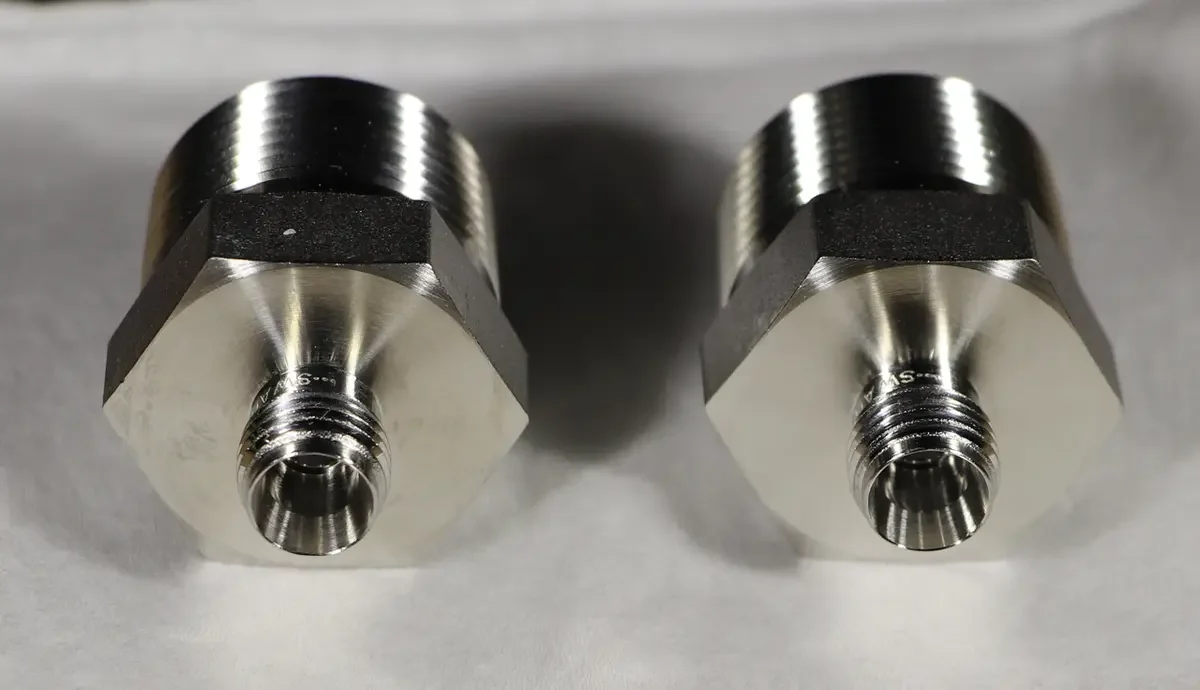
Stainless parts rarely lose days on the machine. They lose them between the machine and the passivation tank. A part is finished on Tuesday, waits for the lot, waits for deburring and cleaning, waits for a pickup and then waits for the finisher’s next run. Plan the batch as a job of its own and most of that wait disappears. This guide is for the shop owner or planner who sends stainless parts for passivation or runs the tank in house and wants the date promised to the buyer to hold.
Why parts sit between machining and passivation
Look at one late order and mark every wait. You will usually find four.
- Waiting for the lot. The last part of the quantity is cut on Thursday, so the first 200 wait three days for it.
- Waiting for cleaning. ASTM A380 covers cleaning, descaling and passivating of new stainless parts as one family of practices aimed at removing surface contaminants. Cleaning sits ahead of the acid step in any sensible route, and it is a step with its own queue.
- Waiting for a pickup or a drop. An outside finisher that collects on Mondays and Thursdays does not care that your lot finished on Friday.
- Waiting for the finisher’s run. A shop may run each method on set days. A lot that misses the cut-off waits for the next one.
None of these is a quality problem. They are all planning problems, and they can be written on a board.
Batch rules: grade, finish, method, tank size
A batch is a group of lots that will go through the same bath at the same time. Decide your rules once and write them down, so the planner does not decide them again on a Friday afternoon.
| Rule | Why it matters | What to write down |
|---|---|---|
| Same method | ASTM A967 covers nitric acid immersion, citric acid immersion and electrochemical treatment as separate methods | Method named on the drawing or order; never mix methods in one batch |
| Same grade family, or as the finisher allows | The standard’s appendices give non-mandatory grade guidance, and different grades can need different handling | The finisher’s process sheet, and a list of grades that go in separate batches |
| Same surface condition | A polished part, a bead blasted part and a ground part react differently to contact and handling | Condition at the time of dispatch |
| Lot identity | Heat number and lot must survive the batch | One tag per lot inside the basket, never loose parts from two lots mixed |
| Tank or basket size | A batch that does not fill a basket may not be worth a slot; one that overfills risks parts touching | The basket quantity per part number and a minimum worth booking |
| Customer requirement | Some orders name a test, a certificate wording or a witnessed process | Flag on the traveler; those lots go separate if the order says so |
The standard makes no recommendation on which grade or acceptance criteria suit an application, so those come from the drawing. Read the passivation test methods guide so the planner knows which test the batch will meet.
Outside passivation: booking, transport, turnaround
When the finisher is another company, treat the slot as an order for a service and book it before the parts exist.
ISO 9001:2015 clause 8.4 treats an outside finisher as an external provider, with controls that scale to the risk the process carries. Booking, records and returned certificates are part of that control.
- Book at order entry. Ask the finisher for a slot when you accept the purchase order, not when machining ends. A booking made at release lets you move the date by a day or two, not by a week.
- Fix the cut-off and the pickup days. Learn when the finisher collects and when the bath runs, and write both on the board.
- Send complete lots. A finisher cannot process a lot of 300 when 120 arrived. Decide whether to wait for the lot or to send a part lot and book a second run.
- Say what comes back. The order to the finisher names the method and standard, the lot numbers and the certificate wording, so the paperwork returns with the parts.
- Track turnaround as a number. Write the date sent and the date returned for every batch. After 20 batches you have your own figure, which is worth more than any published one.
The site’s lead time guide found one published vendor statement of turnaround and no public survey, so your records are the best evidence you can get. For auditing the finisher itself, see the passivation subcontractor audit checklist.
Holding and protecting parts while they wait
Preservation is a requirement as well as good manners. ISO 9001:2015 clause 8.5.4 asks an organisation to preserve outputs during production, as far as needed to keep them conforming, and its note names identification, handling, contamination control, packaging, storage and protection. For parts that wait for passivation that means:
- Dry and clean. Do not leave parts wet with coolant. Degrease before they go to the waiting area, if your route says so.
- Away from carbon steel. Keep stainless parts off steel shelves, steel brushes and shop floor dust. Use plastic, wood or stainless racks.
- Separate by lot. One container per lot with the traveler or tag inside, so heat numbers do not get lost.
- No contact between parts. Parts that rub in a bin leave marks that later show as stains. Use dividers or trays on fine finishes.
- Handle with clean gloves for parts with polished or critical surfaces.
- Time limit. Set a maximum number of days parts may wait before someone checks them, and write it on the board.
The cleaning guide covers the steps between machining and packing from the buyer side.
Need a quote for this part? Get a quote for your stainless parts
A batch board for the week
A whiteboard or a shared sheet is enough. Each row is one batch. Keep it where the planner and the person who ships can both see it.
| Batch | Lots and part numbers | Grade | Method | Quantity | Cleaned | Ready date | Sent | Back with certificate | Customer date | Notes |
|---|---|---|---|---|---|---|---|---|---|---|
| PB-101 | L-2210 part A | 316L | Citric | 300 | yes | Tue | Wed | Mon | Fri | Slot booked |
| PB-102 | L-2211 part B, L-2213 part C | 316L | Citric | 180 + 120 | no | Thu | Next Wed | Lot C in cleaning | ||
| PB-103 | L-2209 part D | 17-4 PH | Nitric | 90 | yes | Mon | Tue | Thu | Waiting for certificate |
The entries above are an example only. The columns do the work:
- Ready date is when the whole batch will be cleaned and boxed, not when the first part is cut.
- Sent and Back with certificate give you your turnaround records.
- Customer date puts the promise next to the plan, so a gap is visible on Monday and not on Thursday.
- Notes carries blockers: lot in cleaning, certificate wording to confirm, customer witness.
Review the board for ten minutes at the same time each day. Any batch with less than two working days between “Back” and “Customer date” is at risk, and the planner decides what to do about it that day.
Telling the buyer when a batch moves
Buyers can accept a slip they hear about early. They cannot accept one they discover at the dock. When a batch moves, send a short message with a new date and a reason in plain words:
Order [number], part [number]: the passivation batch has moved from [date] to [date] because [reason: the finisher’s run was full / the lot was not complete / cleaning is not done]. The new customer date is [date]. Nothing in the approved process has changed. If you want to discuss a split shipment of complete lots, tell us by [date].
Do not offer to change finisher or method to recover the time unless the buyer has approved it. For validated and customer-approved parts that is a change the buyer must agree to first, as the change notification guide explains.
If you want RFQs for this kind of work
If your shop cuts stainless and keeps a planned route through cleaning and passivation, apply as a partner shop. Talk to us about the grades and finishes you run.
Sources
- ASTM, A967/A967M passivation specification (store page), methods, tests and scope limits
- ASTM, A380/A380M cleaning, descaling and passivating (store page), scope
- The Core Solution, ISO 9001:2015 clause 8.4 explained, secondary summary
- Advisera community, ISO 9001:2015 clause 8.5.4 preservation, secondary summary
- Wikimedia Commons, Pre and post passivation, image source

Specifications and customer terms differ. Follow the drawing and the order for method, test and certificate.
Frequently asked questions
Why do machined stainless parts wait so long for passivation?
Because passivation is a batch step, often at an outside house with its own weekly run. Parts wait for the lot to finish, for deburr and cleaning, for the carrier and then for the finisher's slot. Shops that plan the batch when the order is placed lose far less time than shops that call the finisher after the last part is cut.
Can I mix grades and lots in one passivation batch?
Only if the specification, the finisher's process sheet and the customer's order allow it. Each lot must stay identifiable by heat number inside the basket, and the certificate must carry the lot number. If a method or grade needs different handling, give it its own batch rather than risk a failed test.
How do I keep parts from rusting while they wait?
Keep them clean, dry and separate from carbon steel, and protect them as ISO 9001:2015 clause 8.5.4 expects: identification, handling, contamination control, packaging and storage as needed to keep the part conforming. Never leave machined stainless wet with coolant overnight, and never store it in contact with steel.
Is changing to another passivation vendor allowed to recover a late batch?
Not without checking the customer's order. For a validated or customer approved part the finisher is part of the approved process, so a change needs the buyer's written approval. Ask early rather than discover it at shipping.
Need a quote for this part?
Send the drawing. We read it, send one itemised quote within 24 business hours and place the work with a partner shop that cuts stainless.
Get a quote for your stainless partsFigures in this guide are published specification limits or published typical values for the alloy, not measurements of any part. Machinability is rated against free-machining carbon steel B1112 at 100 and PREN is chromium plus 3.3 times molybdenum plus 16 times nitrogen. The conventions are set out in thereference section and the editorial standards.