What a stainless shop needs before it quotes medical work: measuring, cleaning and records, in the order to build them
November 21, 2026
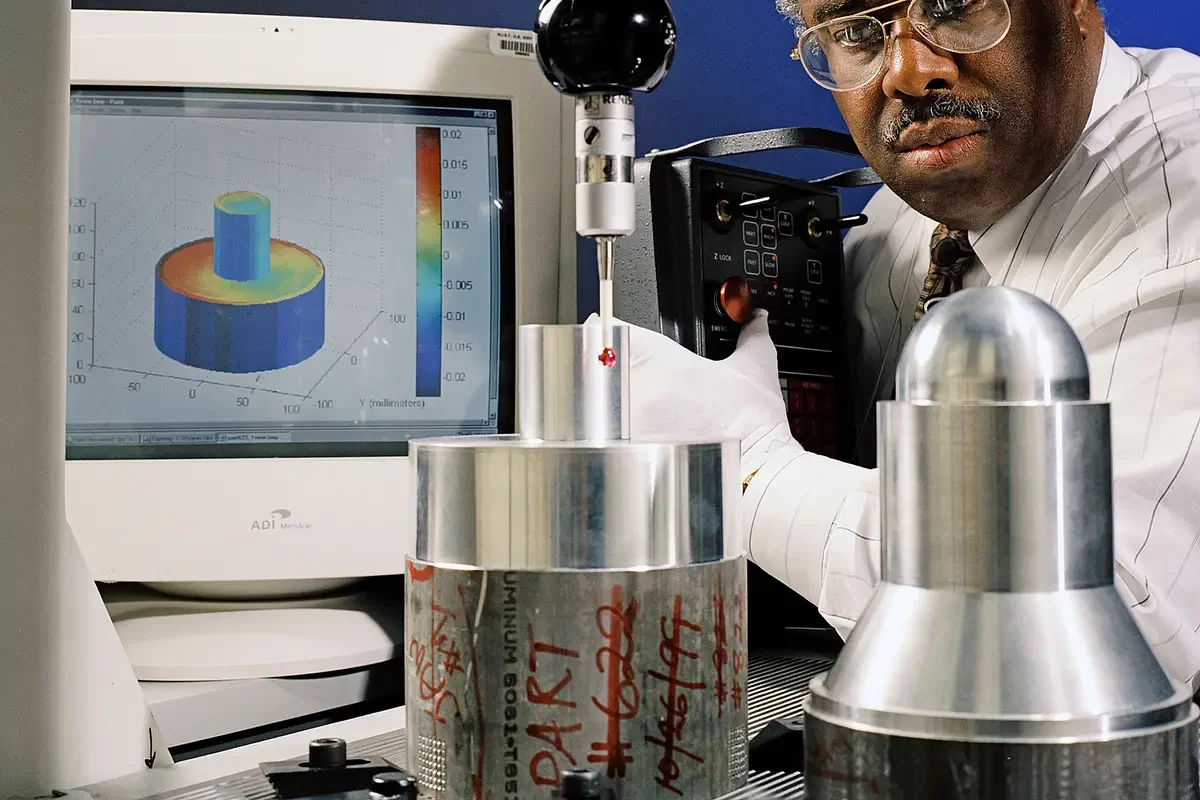
A stainless shop enters medical work by being able to prove three things on a real lot: that the part was measured with a method you checked, that it left the shop clean, and that the heat number follows it from bar to box. Equipment is the smaller part of that. A shop with an old manual CMM, a good gauge record and a written cleaning step beats a shop with a new machine and no records. This guide is for the owner or quality person of a shop that cuts 316L and 17-4 PH and wants to know what to buy, what to subcontract and what to build first. It does not repeat the audit routine, which the audit checklist covers.
Nothing here is a regulatory opinion. Your customer’s quality agreement decides what applies to your parts.
Start from the customer’s requirement, not a shopping list
The US rule behind medical device purchasing is the FDA Quality Management System Regulation. It took effect on 2 February 2026 and incorporates ISO 13485:2016. That binds the device maker. Your shop meets it through what the maker writes into the purchase order and the quality agreement. Two consequences follow.
- The requirement differs by part. A cosmetic cover and a structural pin do not get the same demands, so ask for the drawing, the quality agreement and any cleanliness limit before you spend money.
- A certificate is not the entry ticket. Our guide on ISO 13485 against ISO 9001 explains why many buyers accept records without one. Do not claim a certificate you do not hold.
Write the answers into a one-page requirement list for the job: tolerances to be measured, finish, cleanliness limit, documents, packaging and record retention. Every item on that list either points to equipment you own, a subcontractor you control or a gap.
Measuring: what the drawing forces you to buy
Calipers and micrometers cover size. Position, profile, true position of cross holes and form tolerances usually need a coordinate measuring machine or an outside lab. We found no public rule that says a medical part needs a CMM, so let the print decide.
| Characteristic on the print | Usual tool | What to be able to show |
|---|---|---|
| Diameter, length, thickness | Micrometer, caliper, bore gauge | Calibration record, gauge ID on the report |
| Thread | Go and no-go gauges | Gauge calibration, who checked the thread |
| Position, profile, perpendicularity | CMM or optical system | Program revision, datum scheme, verification record of the machine |
| Surface roughness Ra | Contact profilometer | Calibration against a reference specimen, trace location |
| Cosmetic and burr | Magnification, sample board | A written accept and reject sample |
Two checks matter more than the machine brand.
Verify the CMM. ISO 10360 is the family of acceptance and reverification tests for coordinate measuring machines. Part 2 covers length measurement. A Renishaw summary of the length test describes five gauges, each measured three times and aligned in seven directions in space, with every result held to the machine’s stated error limit. The same part lets the user re-test periodically. Ask the maker or a calibration lab what reverification interval and test they recommend, and keep the result with the machine file. A buyer reading your CMM report wants to see that the machine itself was checked.
Study the measurement system. The NIST engineering handbook section on gauge studies lists repeatability, reproducibility, stability and bias as the issues to quantify, and it treats operators and parts as part of the study design. In practice that means two or three people measure the same ten parts and you look at the spread. If the spread is a large share of the tolerance, the gauge is the problem, not the machining. Run the study on your tightest feature first.
Cleaning: decide what you run and what you send out
Freshly machined stainless carries coolant film, cutting oil, fine chips and sometimes iron smeared from tooling. ASTM A380 is the practice for cleaning, descaling and passivating new stainless parts. Its scope covers degreasing and general cleaning with alkaline, acid, solvent and detergent cleaners, plus ultrasonics, steam and high pressure water, and it describes how to avoid recontamination after cleaning. The cleaning guide walks the buyer’s view of the same chain.
| Step | In house when | Subcontract when |
|---|---|---|
| Degrease after machining | You run one coolant family and can control bath age | Volume is small and no one owns the bath |
| Ultrasonic rinse and dry | Parts are small and the batch is steady | You cannot keep rinse water and drying air clean |
| Passivation | Volume is steady and someone can run bath checks | Volume is uneven or waste handling is a burden |
| Final clean and bag | You can keep a clean table and a rule for gloves | The customer wants a cleanroom step you do not have |
Whichever way you go, the shop owns the result. If a subcontractor passivates, follow the subcontractor audit guide and keep its certificate in the lot pack.
Proving the part is clean
A380 lists the inspection routes: visual inspection, wipe tests, water-break, free iron and high humidity tests and the copper sulfate test, plus more precise methods such as the ferroxyl test. Pick the ones the order names and record the result per lot.
Where a buyer wants a residue number, the usual reference is ASTM F2459, which extracts residue from a component with a solvent and weighs it. Read two limits in the scope. The method uses sonication or solvent reflux as extraction techniques, and it does not set an acceptable level of cleanliness. The buyer has to give you the limit and the technique. Do not accept “per F2459” as a requirement without a number.
Need a quote for this part? Get a quote for your stainless parts
Passivation: the standard and the tests
ASTM A967 covers chemical passivation by nitric acid immersion, citric acid immersion and electrochemical treatment. Its test practices include water immersion, high humidity, salt spray, copper sulfate and potassium ferricyanide-nitric acid. Which tests apply to a lot is the buyer’s call, written on the order. The test methods guide lists what each one catches, and the batch scheduling guide covers keeping parts out of the tank queue.
Material identification and records
Medical buyers read heat numbers. A bar with a lost tag is hard to defend on a medical lot, so receiving checks come early on any build list. A PMI analyzer prevents the 303-cut-as-316L mix-up, and our PMI guide covers what it cannot read. The document pack guide shows how to assemble the lot folder the buyer asks for.
A sensible order to build in
- Records first. One lot number per job, heat number on every traveler, calibration list with due dates. This costs time, not money.
- Measurement next. Calibrated gauges for every dimension on the drawing, then a gauge study on the tightest feature, then a CMM or a lab you trust for the geometric callouts.
- Receiving check. Mill certificates against purchase order, tagged stock and a PMI route.
- Cleaning written down. Even if a subcontractor runs it, write the steps, the standard and the test that closes the lot.
- Packing last. Match the packaging line on the order, then buy for it.
Run the whole path on a sample lot before the first RFQ arrives. A trial run shows which record is missing while it still costs nothing.
What not to claim
- A certificate you do not hold or one held by your subcontractor.
- Any FDA status. Registration and clearance belong to the device maker.
- A cleanliness level nobody gave you or a test you did not run.
- A CMM program as validated unless someone wrote down what was validated.
Talk to us
If medical stainless work is regular business for you or you are building toward it, read the partner shops page and talk to us. We hold no certificates for anyone, and each shop states its own.
Sources
- FDA, Quality Management System Regulation (QMSR)
- Cornell LII, 21 CFR 820.10, requirements for a quality management system
- ASTM A380/A380M-25, Cleaning, Descaling, Pickling and Passivation
- ASTM A967/A967M-25, Chemical Passivation Treatments for Stainless Steel Parts
- ASTM F2459-24, Extracting Residue from Medical Components and Quantifying via Gravimetric Analysis
- Renishaw, ISO 10360 acceptance and reverification tests for CMMs
- NIST/SEMATECH e-Handbook of Statistical Methods, gauge studies
- Wikimedia Commons, Coordinate Measuring Machines (5885465714), NIST, public domain

Standard revisions are as published on the dates above. Confirm the requirements in your quality agreement with the buyer.
Frequently asked questions
Do I need a CMM to machine medical stainless parts?
It depends on the drawing and the quality agreement, not on a public rule. We found no standard that names a CMM for medical parts. If the print carries position, profile or form tolerances that a caliper cannot measure, you need a way to measure them and to show the method was checked. Many shops start with a CMM or buy inspection from a lab.
Can I send cleaning and passivation to a subcontractor and still quote medical work?
Yes, and many shops do. The buyer will still expect you to control that subcontractor: approve it, name the standard on the order and keep its certificate with the lot. The cleaning result stays your shipment, whoever ran the tank.
Does ASTM F2459 say how clean a part must be?
No. The method extracts residue with a solvent and weighs it. The standard does not set an acceptable level of cleanliness, so the limit has to come from the buyer. Ask for the number and the extraction technique in writing before you agree to test against it.
Do I need ISO 13485 before I quote my first medical part?
Not as a rule. Many buyers set their own supplier rules, and some accept an ISO 9001 shop for simple components. Read the quality agreement. If you hold no certificate, say so and show your records instead. Never claim a certificate or an FDA status that you do not hold.
Need a quote for this part?
Send the drawing. We read it, send one itemised quote within 24 business hours and place the work with a partner shop that cuts stainless.
Get a quote for your stainless partsFigures in this guide are published specification limits or published typical values for the alloy, not measurements of any part. Machinability is rated against free-machining carbon steel B1112 at 100 and PREN is chromium plus 3.3 times molybdenum plus 16 times nitrogen. The conventions are set out in thereference section and the editorial standards.